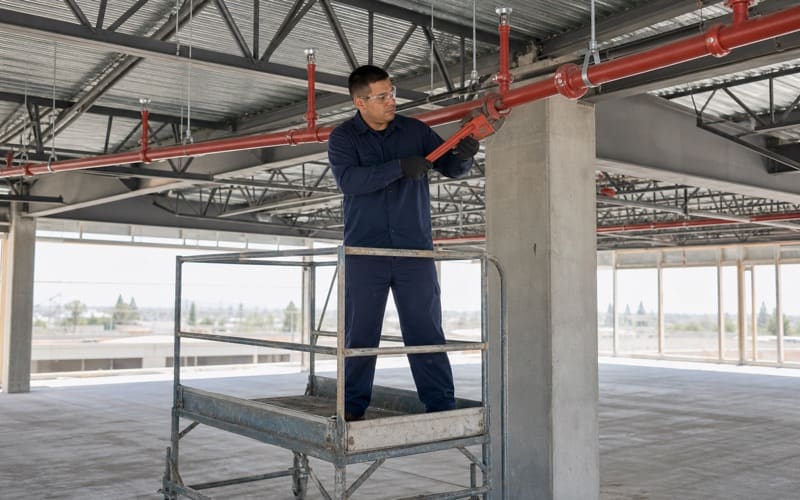
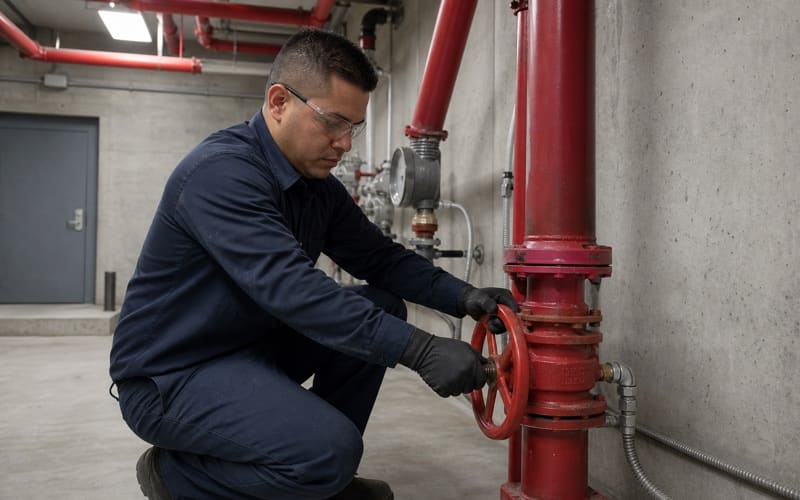
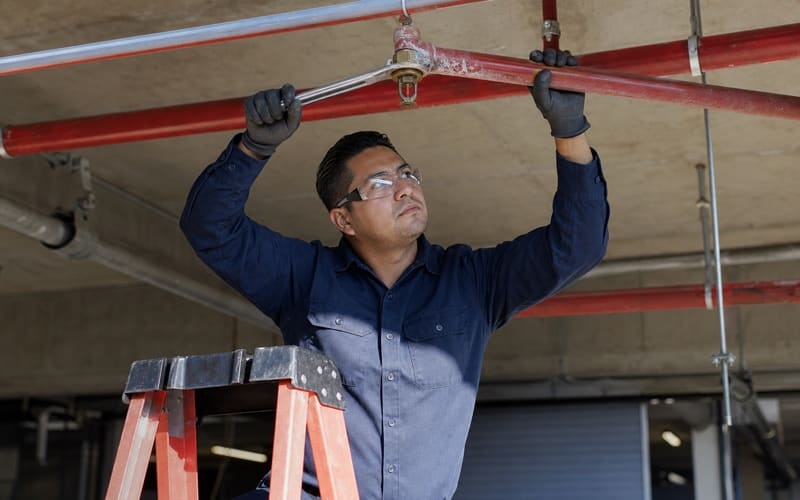
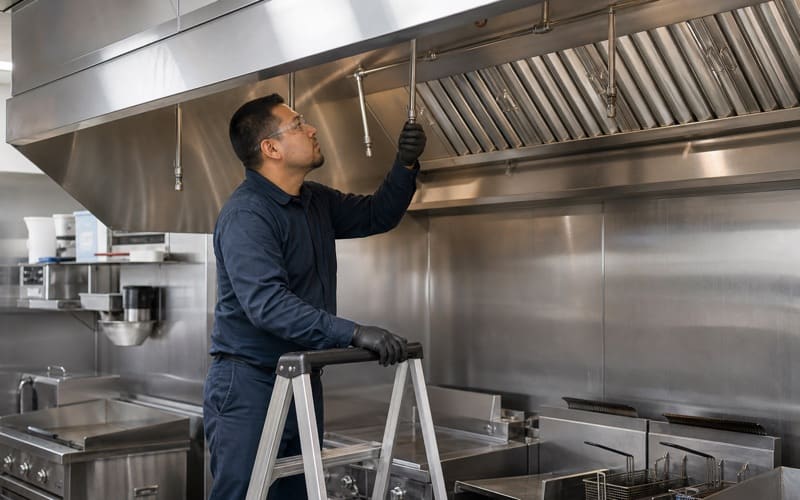
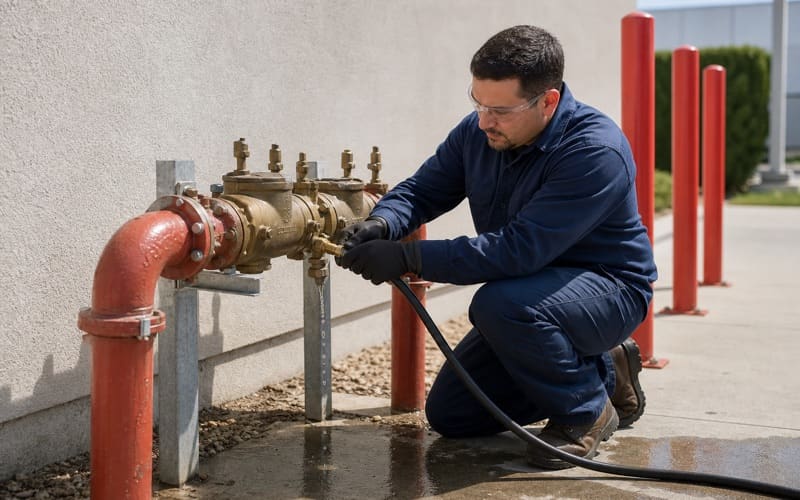
Long Beach Fire Suppression handles fire suppression in Gardena for commercial and industrial buildings, covering water-based sprinkler systems, fire alarms, clean agent suppression, portable extinguishers, and commercial kitchen hood systems. Everything runs through one provider, which is the difference between a building having a single compliance status and having four partial ones held by four different contractors. Residential work is not part of what we do, so commercial inspection dates hold.
The property mix here is unusually varied for a city of its size, running from corporate office space through manufacturing and assembly buildings to warehouses and the restaurants that serve all of them. That variety means the systems differ substantially from one address to the next, and a technician who arrives expecting only wet pipe sprinklers will miss things. We service the full range, including the special hazard and clean agent systems that tend to sit in buildings with valuable equipment inside.
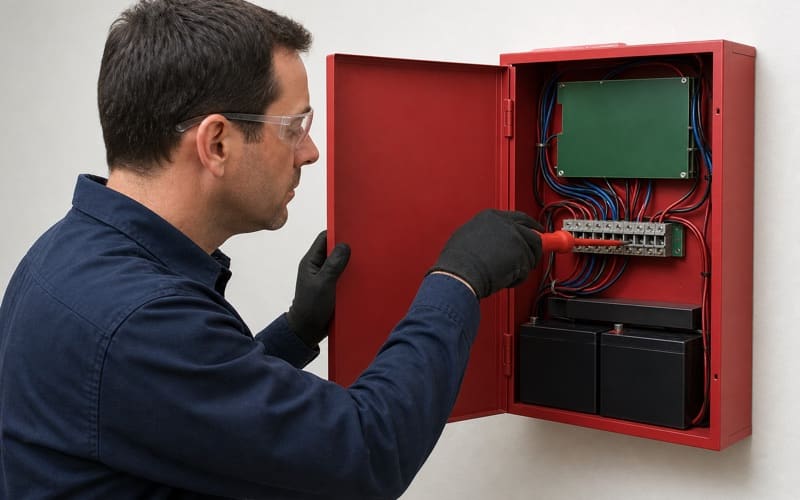
Inspection reports include photographs and the code section behind every deficiency noted, and correction plans price each item separately so the work can be staged deliberately. Where a system is impaired or a property has failed an inspection, we respond on an emergency basis. Recurring due dates are tracked for the properties we service, so annual and semi-annual obligations arrive as scheduled appointments rather than as a surprise from the fire authority.
Office, Manufacturing, and Distribution Property
These three building types fail in different ways and get inspected differently as a result. An office building’s risk sits in its concealed spaces and its electronics; a manufacturing building’s sits in its processes and its ceiling height; a distribution building’s sits in what is stacked inside it and how high. Treating all three with an identical checklist is how deficiencies go unrecorded for years at a time.
Corporate Office and Flex Buildings
Office and flex space is typically protected by wet pipe systems with concealed or pendent heads, and the recurring problem is not the system itself but everything built around it. Tenant improvements move walls, add private offices, drop new ceilings, and reroute ductwork, and sprinkler coverage frequently does not get revisited during any of it. We check head spacing and clearance against the space as it currently stands, and flag where a build-out has left an area effectively unprotected or a head painted over by a finishing crew.
Concealed spaces in office buildings deserve more attention than they usually receive. Above a dropped ceiling and below a raised floor are exactly the places where cabling, ductwork, and stored material accumulate over the years, and whether those voids require protection depends on their construction and contents rather than on habit. We open and inspect them as part of the visit, because a void that has gradually filled with combustible material while nobody was looking represents a genuine change in the building’s risk that no floor-level walkthrough would ever catch.
Manufacturing and Assembly Space
Production buildings introduce variables an ordinary commercial inspection does not account for: heat-producing processes, dust, spray operations, machinery that has been repositioned since the system was designed. Sprinkler heads over a process area may need a different temperature rating than the ones installed, and equipment relocated across a floor changes what sits beneath each head. We look at the current arrangement of the plant rather than assuming the drawings still describe it, and we note where the protection scheme and the operation have diverged.
Process equipment frequently needs protection beyond what the overhead sprinkler system provides. Dust collection, finishing operations, and machinery with their own enclosures may call for dedicated suppression, and where such systems exist we inspect them on their own terms rather than folding them into the general sprinkler report. We also confirm that any interlock between a suppression system and the equipment it protects still functions, since a shutdown sequence that was disabled during a maintenance shift and never restored is invisible until the day it is needed.
Warehouse and Distribution Buildings
Storage occupancies are governed by what is stored, how high it is stacked, and how the racking is arranged, and all three change without anyone thinking to mention it to a fire protection contractor. ESFR heads protect a building only under the specific conditions they were designed around, including clearance between the top of storage and the head itself. We measure that clearance, look at rack configuration and aisle width, and document where storage practices have outgrown the installed system’s design basis.
In-rack sprinklers introduce a further set of considerations wherever storage height makes ceiling-level protection insufficient on its own. Those heads sit where forklifts operate, which means impact damage, bent piping, and heads knocked out of position are ordinary rather than exceptional findings. We inspect the in-rack piping along its length instead of sampling it, document physical damage with photographs, and flag locations where repeated impacts suggest guarding is needed rather than simply repairing the same head every year.
Looking for fire suppression closer to Santa Fe Springs? See Santa Fe Springs Fire Suppression.
A South Bay City With International Business Ties
Gardena is located in the South Bay region of Los Angeles County and had a population of 61,027 at the 2020 census, up from 58,829 in 2010. Until 2014 the U.S. census cited it as the place with the highest percentage of Japanese Americans in California, and that Japanese American population contributes to the South Bay being home to the highest density of Japanese companies within the mainland United States. A commercial base with that much corporate presence brings office buildings, technical facilities, and a substantial food service sector along with it.
Restaurants and Commercial Kitchens
Commercial cooking here spans a wide range of equipment and cuisine, and NFPA 96 ventilation requirements with NFPA 17A wet chemical suppression apply across all of it. We service Ansul R-102 and Pyro-Chem systems semi-annually, verify that nozzle placement corresponds to the appliances actually installed beneath the hood, and test fusible links, manual pull stations, and automatic gas shutoff. Specialized cooking equipment in particular tends to sit under nozzle configurations designed for something else entirely, which is a finding worth catching before an inspector does.
Hood and duct cleanliness sits alongside the suppression system as a recurring issue. Grease accumulation inside the ductwork and around the fan is what turns a contained cooking fire into a structural one, and a suppression system discharging into a heavily loaded duct is fighting a fire it was never sized for. We note the condition of the hood, the filters, and the accessible duct run during service, and we identify where access panels are missing or have been sealed over, which prevents proper cleaning entirely.
Multi-Tenant Commercial Buildings
Buildings divided among several occupants raise the question of who holds responsibility for the shared system, and that question usually stays unanswered until an inspection makes it unavoidable. We establish what a common riser actually protects, coordinate access and any required shutdown directly with the property manager, owner, and tenants rather than relaying it through one party, and deliver a report that gives everyone involved the same account of the building. Where one tenant’s build-out has affected coverage in an adjacent suite, we say so explicitly.
Clean Agent and Special Hazard Systems
Buildings containing equipment that water would destroy need suppression that leaves no residue, and those systems are inspected on their own terms rather than as an afterthought to the sprinkler work. Server rooms, control rooms, test benches, and equipment spaces frequently carry them, and they are among the systems most often found neglected because they sit behind a door most people never open.
FM-200, Novec 1230, and CO2 Systems
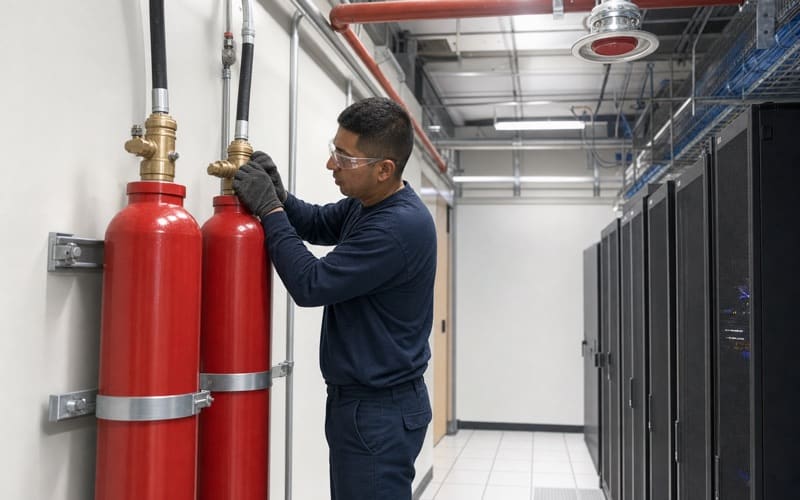
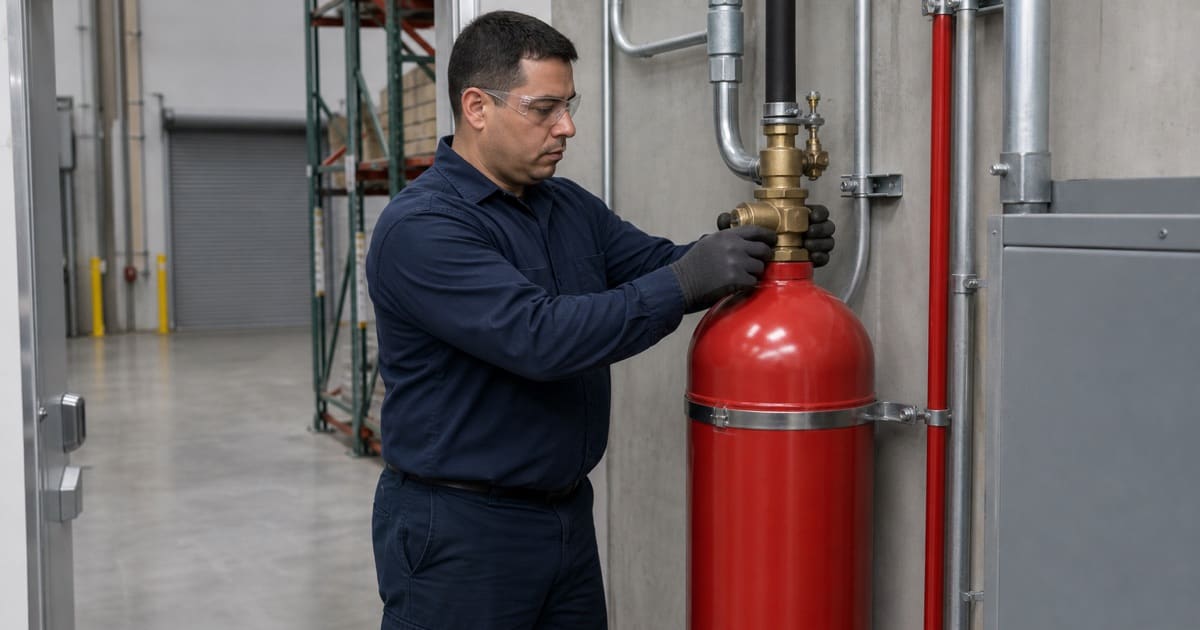
We inspect and service FM-200, Novec 1230, and CO2 clean agent installations, checking agent quantity and pressure, verifying detection and the release sequence, and confirming that door closures, dampers, and interlocks all operate as the design assumed they would. Room integrity matters as much as the hardware, and a space that has had cable penetrations added since commissioning may no longer hold agent concentration long enough to matter. Discharge testing and pressure verification follow the schedule the specific system requires.
Documentation on clean agent systems tends to be thinner than on any other system in a building, largely because the original installer was often a specialty contractor who has since moved on. We record agent type, quantity, cylinder weights, hydrostatic test dates, and the detection arrangement, so the property has an actual baseline to test against in future years. Where a system protects a space whose use has changed since commissioning, we say plainly whether the installation still suits what is now in the room.
Extinguishers Matched to the Hazard
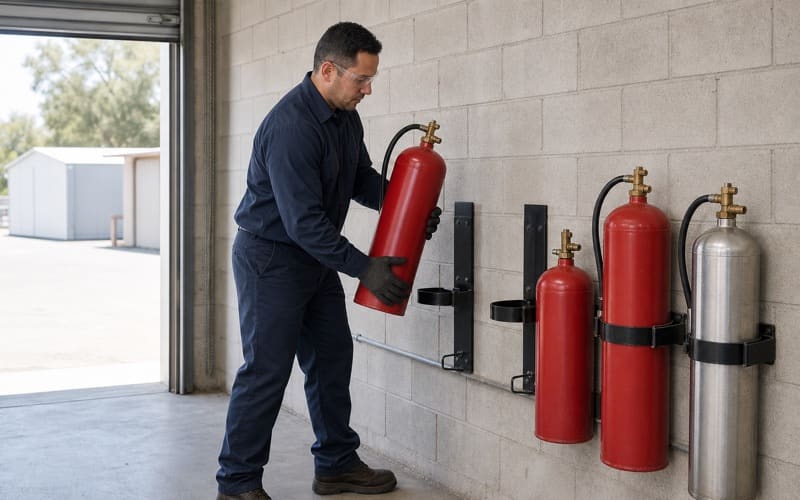
Portable extinguishers under NFPA 10 have to suit the hazard actually present, not simply exist in the required numbers. Class K units belong in kitchens, ABC dry chemical serves general areas, and CO2 units go where electrical and electronic equipment would be damaged by anything else. We check placement, travel distance, mounting, and service dates, handle annual maintenance and hydrostatic testing at the intervals each type requires, and correct mismatches where the wrong unit has ended up in the wrong room.
Compliance Records and Deficiency Correction
California Fire Code and Title 19 state fire marshal requirements put the burden of proof on the owner, and proof means documentation rather than a tag on a valve. Our reports are built to answer what an inspector will actually ask, and to remain useful later to a lender, an insurer, or a prospective tenant reviewing the building.
Reports That Explain Themselves
Every deficiency carries a photograph and a citation to the code section behind it, so an owner can see the condition and understand the basis for the recommendation without taking it on trust. That also draws a clean line between what the code obliges and what we would merely advise, which protects an owner from paying for the second under the impression it was the first. Findings are ranked by consequence rather than listed in the order they were encountered.
Correction, Staging, and Emergency Work
Repairs go back to the same crew that performed the inspection, so the work begins with firsthand knowledge of the building instead of a repeat diagnosis. Pricing each deficiency separately lets an owner clear urgent items now and schedule the rest across a budget cycle, and we work around operating hours so a production floor, a warehouse, or a dining room keeps running while it happens. Impaired systems and buildings under an active correction deadline get emergency response and full documentation of the impairment period.
- Commercial & Industrial Only
- Code-Cited Inspection Reports
- Emergency Impairment Response