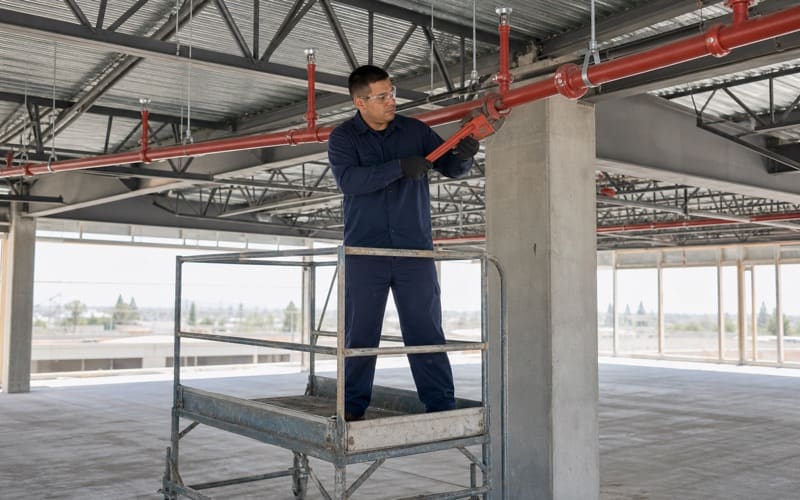
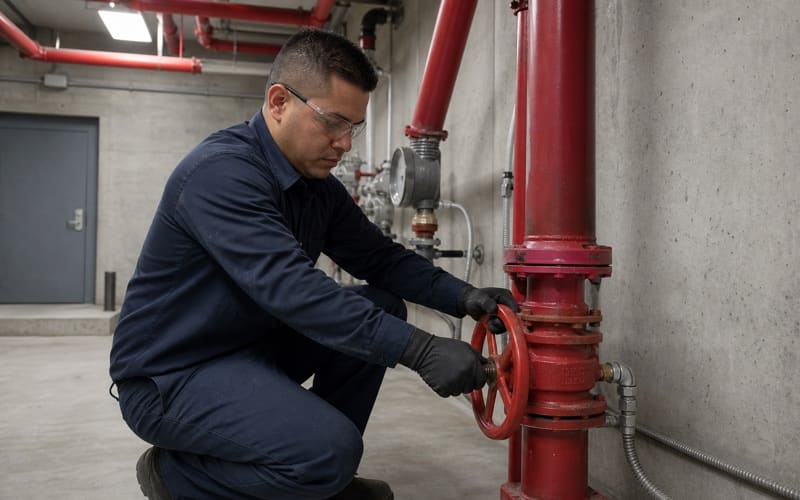
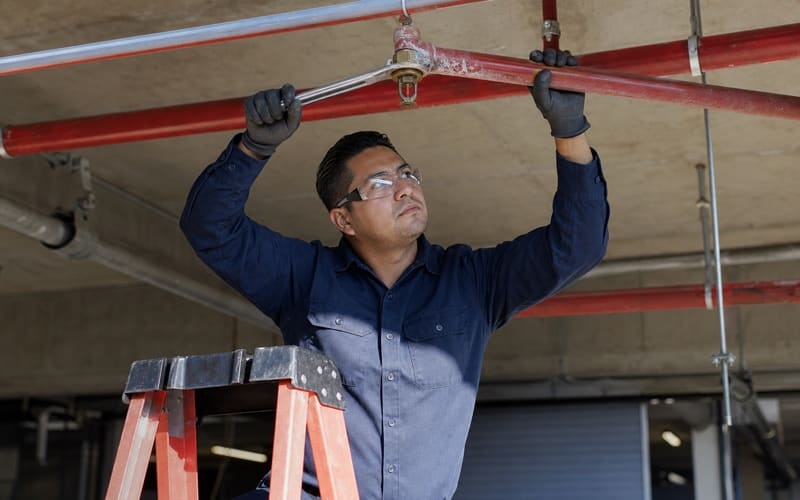
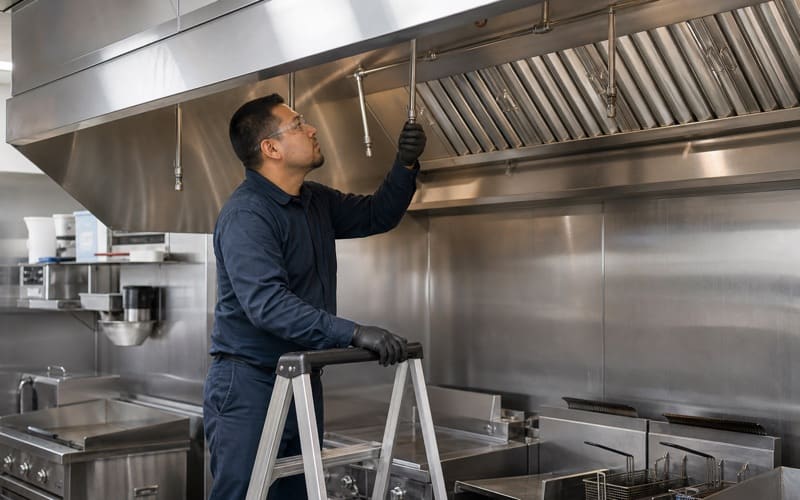
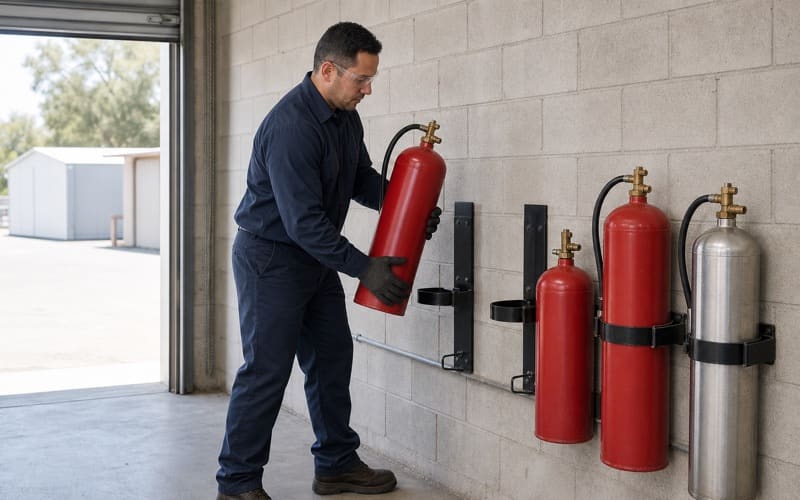
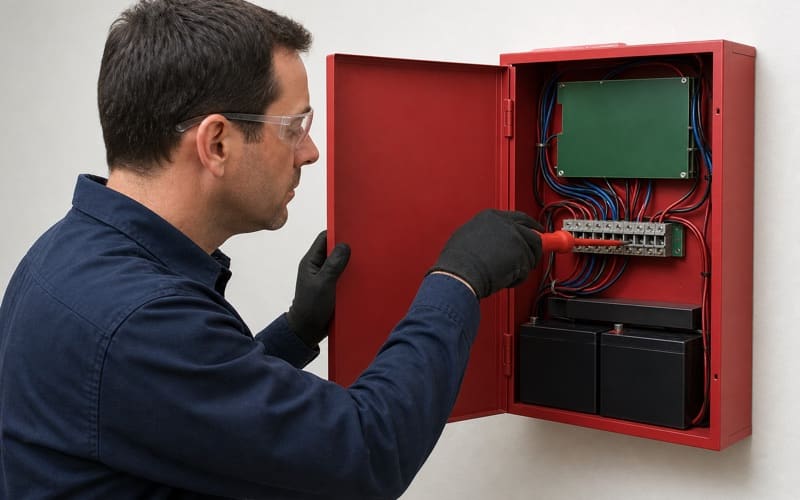
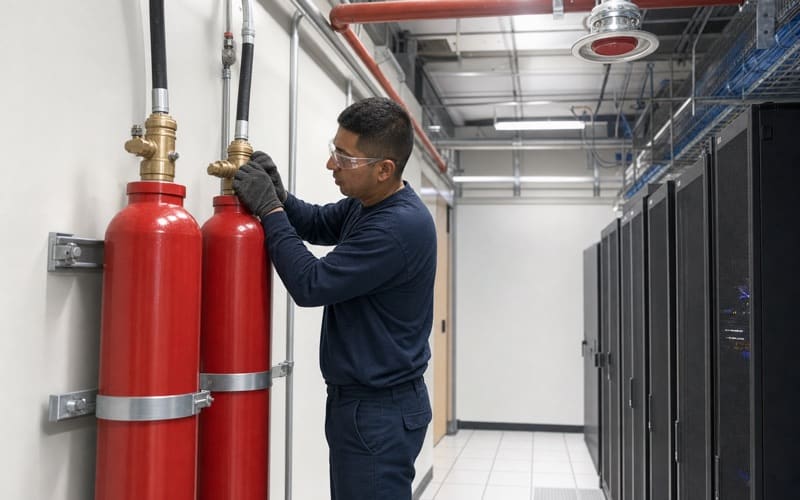
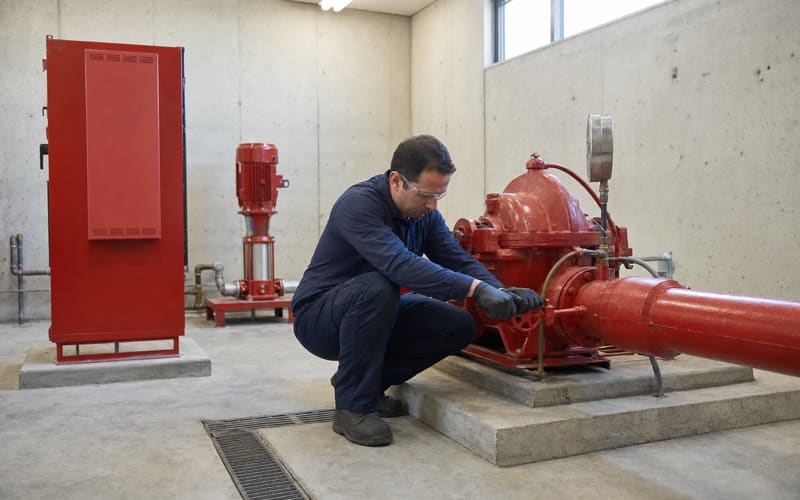
Long Beach Fire Suppression provides fire suppression in Hermosa Beach for commercial property, covering sprinkler systems, fire alarms, portable extinguishers, and commercial kitchen hood suppression under one provider. For a small building carrying all four, that consolidation is the difference between one visit and one deficiency list, and four separate appointments that each interrupt trading. We work on commercial and industrial property only, so a booked inspection date holds.
Coastal buildings age differently, and the difference shows up first on anything mounted outside or exposed to open air. Salt-laden atmosphere attacks fittings, threads, mounting hardware, and cabinet housings continuously, and the components most affected are frequently the ones nobody looks at between inspections because they sit on an exterior wall rather than inside the building. A fire department connection that has corroded shut is a serious problem that produces no symptom at all until the day it matters.
We inspect exposed equipment with that in mind rather than treating exterior components as a formality at the end of a visit. Findings are documented with photographs and the code section behind them, priced individually so an owner can sequence the work, and repairs are carried out by the crew that performed the inspection. Impaired systems and buildings under a correction deadline get emergency response.
Salt Air and Exposed Components
Corrosion in a coastal setting is not a uniform process across a building. It concentrates where moisture, salt, and metal meet without protection, which means exterior fittings, roof-mounted equipment, and anything in a semi-enclosed space deteriorate on a much shorter timeline than identical components installed indoors a few miles inland. An inspection that applies the same expectations to both will consistently miss the problem.
Fire Department Connections and Exterior Fittings
A fire department connection has to accept a hose on the worst day the building ever has, which means caps present, threads clean and undamaged, gaskets sound, swivels turning, and the connection clear of obstruction. In coastal air, threads seize and caps corrode into place, and a missing cap allows debris and salt directly into the piping behind it. We check and exercise these rather than confirming their presence from a distance, and we replace corroded caps and damaged gaskets as part of the work instead of listing them for someone else.
Exposed piping, hangers, and supports on exterior walls and rooftops deteriorate along the same lines. Surface rust progressing into section loss is a genuine structural concern for the pipe it supports, and hanger failure on a charged line causes damage well beyond the fire protection system. We inspect the supports rather than only the pipe, photograph deterioration so its progression can be tracked between annual visits, and identify where protective coating has failed and should be restored.
Roof-mounted equipment sits in the most aggressive position on the building and receives the least routine attention. Alarm devices, conduit, antenna mounts for monitoring equipment, and any pipe running across a roof are exposed continuously to salt air and sun, and fixings degrade before the components they hold do. We inspect what is mounted up there rather than confirming it from below, since a device that has worked loose is both a fault waiting to occur and a hazard to whoever next walks the roof.
Backflow Assemblies and Outdoor Enclosures
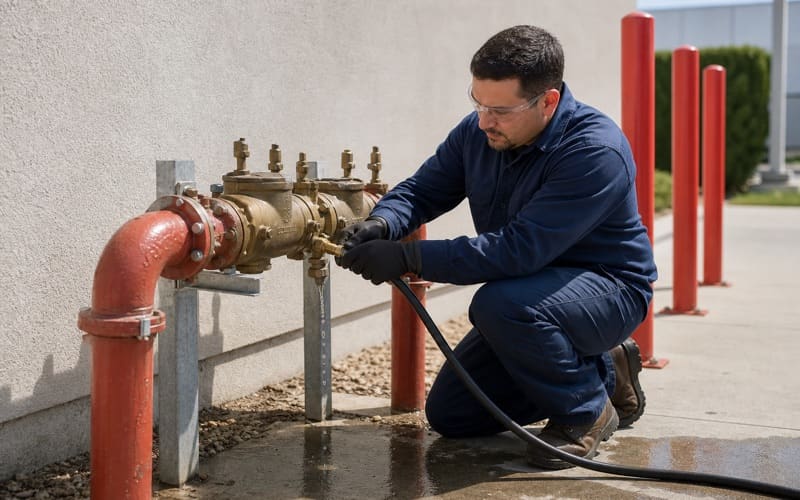
Backflow preventers on a fire line are frequently installed outdoors in an enclosure, which places a critical assembly in exactly the environment least kind to it. Double check valve assemblies and reduced pressure zone assemblies both require annual testing, and in coastal conditions their internal components and external hardware age faster than a standard replacement interval would predict. We test and tag them, and where a device has passed the point of being worth rebuilding we say so directly rather than passing it another year.
The enclosures themselves matter more than they appear to. A cage or housing that has corroded to the point of not closing leaves the assembly exposed to weather and interference, and one rusted shut prevents access for testing entirely. We note enclosure condition as part of the inspection, since an assembly that cannot be reached on the day of a test is a scheduling failure waiting to happen.
Sand and grit compound what the salt begins. Airborne particulate works into moving parts, valve stems, hinges, and the operating mechanisms of exterior equipment, and it accelerates wear on anything meant to turn, latch, or release. We exercise moving components during the inspection instead of confirming their presence, because a valve stem that has not been turned in three years is very often a valve stem that will not turn when someone urgently needs it to.
Heads in Open and Semi-Enclosed Areas
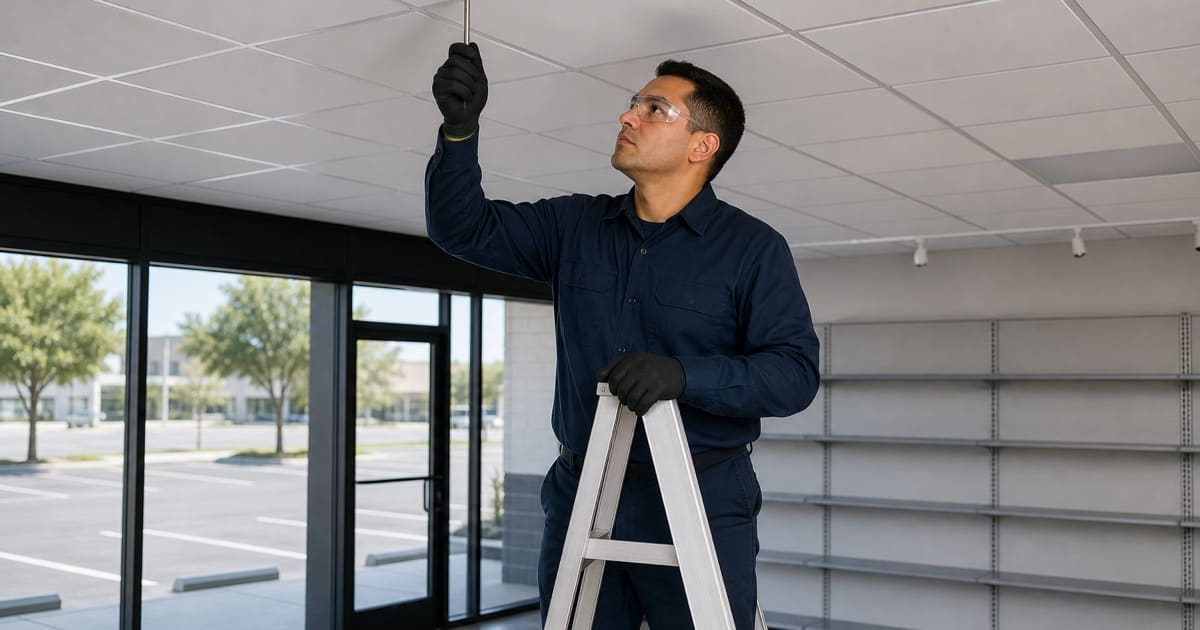
Sprinkler heads protecting covered outdoor areas, walkways, and semi-enclosed spaces face conditions indoor heads never encounter. Corrosion around the deflector and the operating element can prevent a head from functioning at its rated temperature, and coastal deposits build up gradually enough that nobody notices the change. We inspect these heads closely for corrosion, loading, and paint, and we replace those showing deterioration rather than deferring to a five-year interval that assumes a gentler environment.
Heads serving covered patios and semi-enclosed areas also raise a coverage question rather than only a corrosion one. Awnings, heaters, screens, and seasonal enclosures get added to outdoor areas over time, and an area that becomes enclosed enough to hold smoke may now require protection it never had when it was genuinely open air. We look at how these spaces are currently configured and identify where a gradual enclosure has outrun what the building’s protection was designed to cover.
Looking for fire suppression closer to Pico Rivera? See Pico Rivera Fire Suppression.
A Beach City With a Compact Commercial Core
Hermosa Beach is a beachfront city in Los Angeles County with a population of 19,728 at the 2020 U.S. census, located in the South Bay region of the Greater Los Angeles area as one of the three Beach Cities, bordered by Manhattan Beach to the north and Redondo Beach to the south and east. Commercial property concentrated in a small coastal city tends toward compact buildings on tight parcels, often with several businesses sharing a structure and very little room to work outside it.
Restaurants, Bars, and Food Service
Commercial cooking carries NFPA 96 ventilation requirements and NFPA 17A wet chemical suppression, needing service twice a year regardless of how seasonal the trade is. We service Ansul R-102 and Pyro-Chem systems, verify nozzle coverage against the appliances currently sitting under the hood, and test fusible links, manual pull stations, and automatic gas shutoff. In a compact kitchen equipment gets shifted along the line to make room far more often than in a spacious one, and the nozzles overhead almost never move to follow it.
Grease loading in the hood, filters, and accessible duct run is noted during every service, since a suppression system discharging into a heavily loaded duct is fighting a fire larger than the one it was sized for. Where access panels are missing or have been covered over during a remodel, proper cleaning of the duct becomes impossible and we identify that specifically. Class K extinguishers belong on the cooking line and are serviced during the same visit rather than as a separate trip.
Small Retail and Mixed Commercial Buildings
Buildings divided among several small tenants raise the recurring question of who is responsible for a shared system, and it usually stays unresolved until an inspection forces it. We establish what a common riser genuinely protects, identify where a build-out has left a space without a head or obstructed existing ones, and coordinate access and shutdowns directly with the property manager, owner, and occupants. Where commercial space sits beneath or beside occupied residential units, unsealed penetrations made during past remodels are worth finding before anyone else does.
Buildings with occupied units above commercial space raise the stakes on every alarm deficiency below. Notification has to reach the people upstairs where the arrangement requires it, separations between occupancies need to remain intact, and detection in the commercial space has to work reliably given who is asleep above it. We test the interface between systems where one exists rather than treating the commercial and residential portions as unrelated, and we document clearly where a past remodel has compromised a separation.
Working Around Peak Trading
Businesses whose revenue concentrates into evenings, weekends, and a seasonal peak cannot absorb a shutdown dropped into the wrong window. We schedule around operating hours, keep required outages short and predictable, and give advance notice to every occupant the work will touch rather than only the party who booked it. Where an outage would need to run long enough to require a fire watch, we say so when scheduling instead of raising it once the system is already drained.
Systems, Intervals, and Records
Testing intervals come from NFPA 25 for water-based systems and NFPA 72 for fire alarms, running quarterly, semi-annually, annually, and at five-year marks depending on the component. We track recurring due dates for the properties we service, which keeps a small operator from discovering an overdue obligation through a notice rather than a calendar.
Water-Based Systems Inside the Building
We run main drain tests and record actual readings rather than marking a pass, exercise OS&Y and post indicator valves, confirm flow and tamper switches report correctly to the panel, and inspect pendent, upright, sidewall, and concealed heads for corrosion, paint, loading, and obstruction. Five-year internal obstruction inspections are scheduled against the documented installation date, and in coastal buildings the internal condition of the pipe is worth establishing properly rather than assuming it matches a comparable inland property.
Alarms, Monitoring, and Portable Equipment
An NFPA 72 annual covers initiating devices, notification appliances, duct detectors, and the interface with the sprinkler system’s supervisory devices, and we verify signals actually reach the central station instead of assuming an intact path. Portable extinguishers under NFPA 10 are checked for placement, travel distance, mounting, and current service, with hydrostatic testing and internal maintenance carried out at the intervals each unit type requires. Cabinets and brackets in exposed locations get inspected for corrosion alongside the extinguishers they hold.
Reporting and Correction
Every finding carries a photograph and the code section behind it, ranked by consequence rather than by the order encountered, so an owner can see the condition and the reasoning without taking either on trust. Correction plans price each deficiency separately, letting urgent items be cleared immediately while the remainder is phased across a budget cycle. Repairs go back to the technicians who carried out the inspection, and impairments are documented from the moment they begin through the confirmed return to service.
- Commercial & Industrial Only
- Code-Cited Inspection Reports
- Emergency Impairment Response