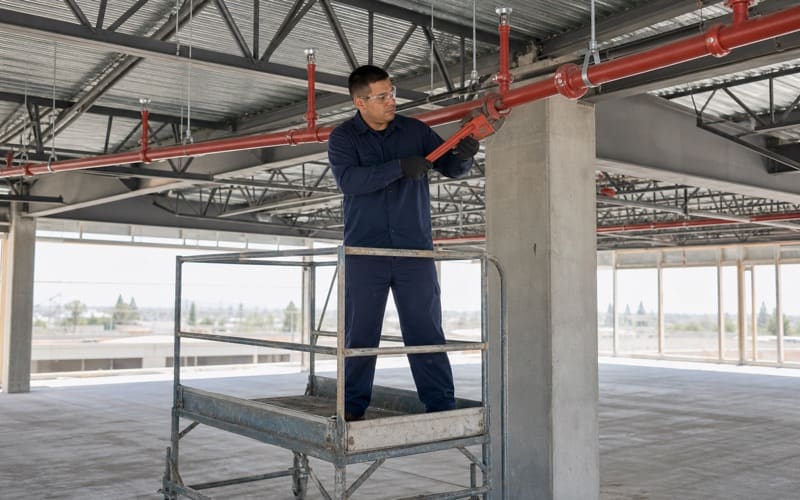
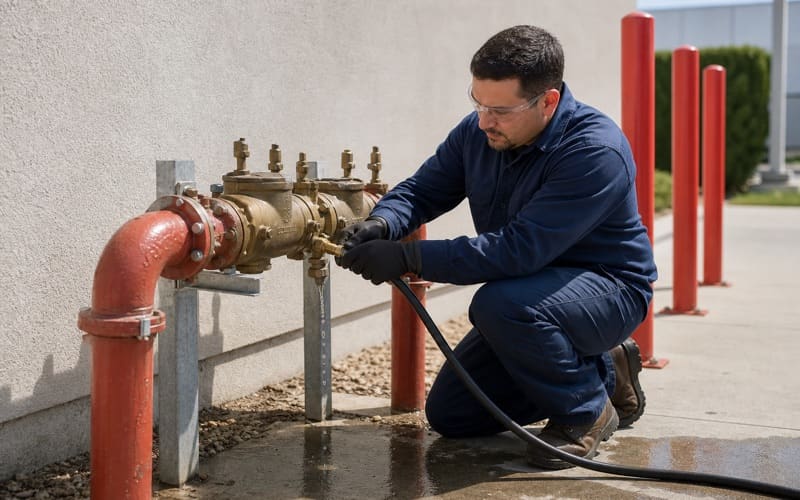
Long Beach Fire Suppression delivers fire suppression in La Mirada for commercial and institutional buildings, holding sprinklers, fire alarms, standpipes, portable extinguishers, and kitchen hood systems within a single scope of work. That consolidation is what lets a building carry one compliance position instead of several partial ones split across separate contractors. Residential work is not something we take on, so a scheduled commercial inspection date is not traded away for anything else.
Buildings that gather large numbers of people are the ones where fire protection is judged most strictly, and a good share of the property in this city falls into that category. Occupant load drives requirements that a warehouse or a small office would never encounter: audibility of notification appliances across a large volume, egress that stays usable, and systems that have to function while hundreds of people are inside. Inspecting that kind of building well takes more than confirming a valve is open.
Every deficiency we record carries a photograph and the code section behind it, and correction plans price each item individually so the work can be staged against an actual budget rather than presented as one intimidating number. The technicians who performed the inspection are the ones who return to carry out repairs. Impaired systems and buildings under an active correction order move ahead of routine testing.
Assembly, Institutional, and Public-Serving Buildings
An assembly occupancy concentrates risk in a way ordinary commercial space does not, because the people inside are frequently unfamiliar with the building and depend entirely on its systems working as designed. That shifts what an inspection has to prove. It is not enough for a system to be nominally in service; it has to perform under the conditions the building genuinely presents when full.
Performance and Event Space
The city is home to the La Mirada Theatre for the Performing Arts, and performance buildings generally introduce protection questions that ordinary occupancies avoid entirely. High ceilings change how quickly a head activates, stage and rigging areas carry their own requirements, and the volume of the room affects whether notification appliances are actually audible over whatever is happening on stage. We look at coverage across the full height of a space rather than assuming a floor-level walkthrough tells the story.
Back-of-house areas in this kind of building are where deficiencies collect. Scene shops, storage rooms, dressing areas, and equipment spaces accumulate combustible material steadily, and they are rarely part of anyone’s routine walkthrough. We inspect them specifically, check that heads have not been obstructed by stored material stacked too close, and note where a room’s actual contents have moved beyond what its protection was designed around.
Temporary installations are the other recurring issue in performance space. Sets, drapes, temporary electrical, and decorative material introduced for a production change the fuel load of a room for weeks at a time, and they frequently sit closer to a sprinkler head than any permanent fixture would be permitted to. We note required clearance around heads during the inspection and explain where a routine staging practice is creating an obstruction, since this is the kind of finding a venue can resolve through its own procedures rather than through a repair.
Recreation and Aquatic Facilities
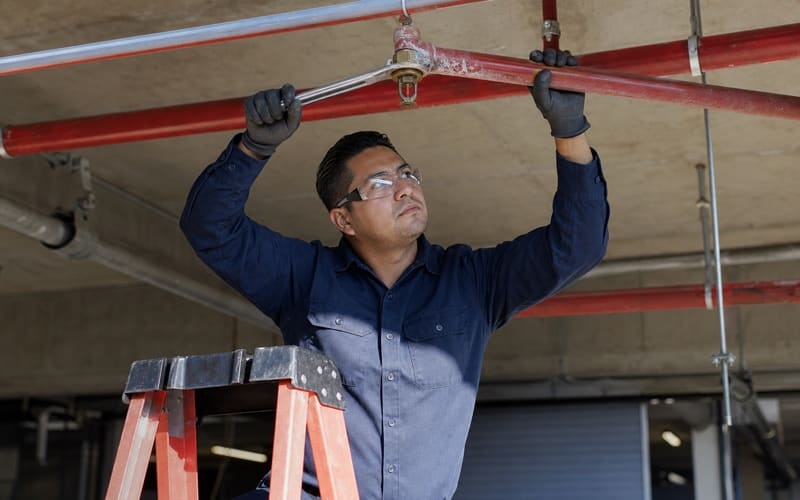
Splash! La Mirada Regional Aquatics Center is another of the city’s major attractions, and aquatic and recreation buildings present a distinct problem for water-based systems: a permanently humid, chemically aggressive environment that attacks sprinkler components from the outside. Corrosion on heads, hangers, and exposed pipe progresses faster in that setting than anywhere else in a normal commercial portfolio. We inspect for external corrosion carefully in these buildings and replace heads showing deterioration rather than waiting for a five-year interval to force the issue.
Mechanical and chemical storage areas attached to such facilities need attention on their own terms. Rooms holding pool chemicals, boilers, or filtration equipment carry hazards that general sprinkler coverage was never intended to address, and extinguisher selection in those spaces has to match what is actually stored. We check placement, type, and travel distance against the hazard present rather than against a generic layout.
Corrosion runs faster in a humid building than the standard inspection interval assumes, and that applies to more than the sprinkler heads. Hangers, supports, exposed pipe, cabinet housings, and the mounting hardware on alarm devices all deteriorate in a pool environment, and a hanger failing on a charged line causes damage well beyond the fire protection system itself. We inspect supports rather than only the pipe they carry, and we photograph deterioration so its progression is visible from one year to the next instead of being reassessed from memory.
Campus and Classroom Buildings
La Mirada is the home of Biola University, an evangelical Christian institution of higher education, and campus-type property brings a building portfolio rather than a single structure. Classrooms, laboratories, offices, assembly halls, dining facilities, and residence-style buildings each carry different requirements, frequently under one owner and one budget cycle. We sequence inspections across a portfolio like that so the whole set stays current together, instead of individual buildings drifting onto separate schedules nobody is tracking as a whole.
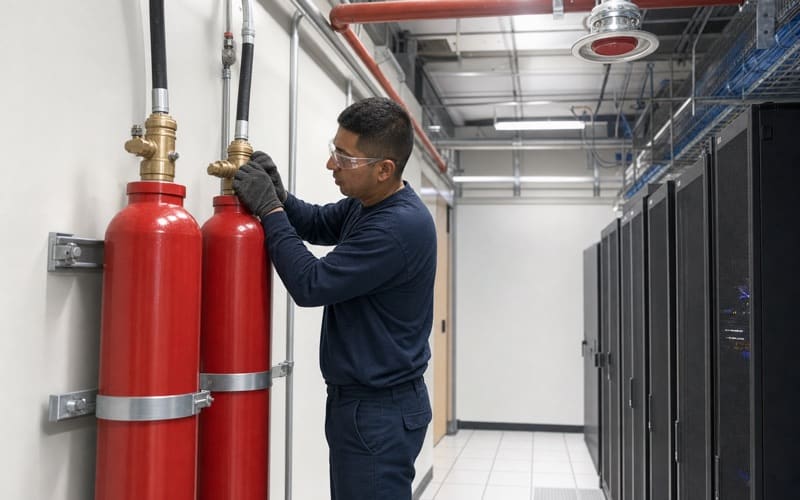
Laboratory and technical space on a campus needs treatment on its own terms. Rooms holding chemicals, compressed gases, or specialized equipment carry hazards that general sprinkler coverage was never meant to address, and extinguisher selection has to match what is genuinely stored rather than following a standard building layout. Where clean agent suppression protects a server room or an equipment space, we inspect it separately, checking agent quantity, detection, release sequence, and whether room integrity still holds after years of cable penetrations being added.
Looking for fire suppression closer to Cudahy? See Fire Suppression Services in Cudahy.
A Gateway City on the Orange County Border
La Mirada is a city in southeast Los Angeles County and one of the Gateway Cities, sitting on the border with Orange County, with a population of 48,008 at the 2020 census. Its position on a county line matters for operators running locations on both sides, since the inspection intervals themselves do not change but the local process around permits, plan check, and reinspection does. We work routinely on both sides of that boundary and keep the procedural differences straight.
Retail and Multi-Tenant Commercial
Multi-tenant retail here raises the familiar question of who is responsible for a shared system, and it typically goes unanswered until an inspection forces it into the open. We establish what a common riser actually protects, identify where one tenant’s build-out has affected coverage in a neighboring suite, and coordinate access and shutdowns directly with the property manager, the owner, and the occupants. Dealing with each party directly is what keeps a planned drain-down from arriving as a surprise to the business that has to work around it.
Commercial Kitchens and Dining Facilities
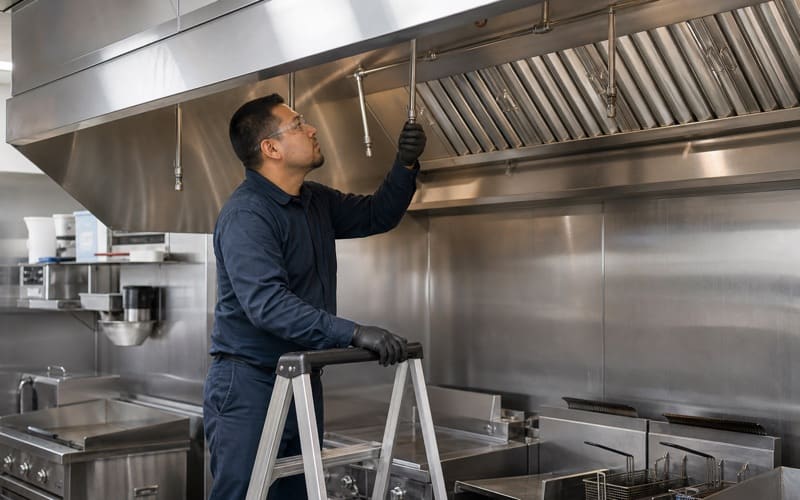
Cooking operations inside institutional and assembly buildings carry NFPA 96 ventilation requirements and NFPA 17A wet chemical suppression exactly as a standalone restaurant does, and they need service twice a year regardless of how seasonally the kitchen runs. We service Ansul R-102 and Pyro-Chem systems, verify nozzle coverage against the appliances currently installed beneath the hood, and test fusible links, manual pull stations, and automatic gas shutoff. Cafeteria kitchens that operate on an academic calendar are especially prone to falling behind, since a quiet summer makes an overdue service easy to overlook.
Buildings that run on an academic or seasonal calendar benefit from having inspections planned against that calendar rather than against the anniversary of an installation. Testing that would be disruptive during a full term is straightforward during a break, and work requiring notification appliances to sound is far easier to place when a building is lightly occupied. We schedule around the operating pattern a property actually has, which usually means a facilities director spends less time negotiating access on our behalf.
Notification, Standpipes, and Occupant Safety
In buildings holding significant numbers of people, the systems that direct occupants out matter as much as the ones that suppress a fire. These are also the systems most affected by ordinary building use, since furniture, signage, decoration, and stored material all interfere with them without anyone recognizing it as a life safety problem.
Alarm Systems in Occupied Buildings
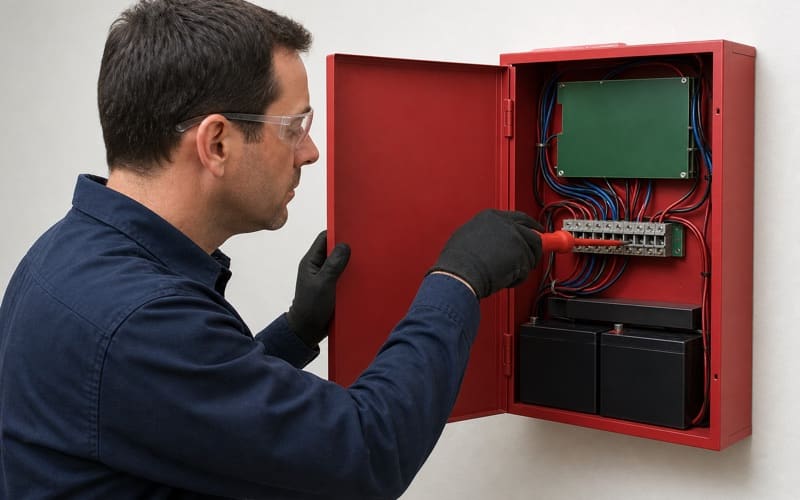
An NFPA 72 annual covers initiating devices, notification appliances, duct detectors, and the interface between the alarm and the sprinkler system’s flow and tamper switches. In an assembly building the audibility question is genuinely substantive rather than a formality, because a device adequate for an empty room may not carry over an occupied one. We verify that signals reach the central station rather than assuming the transmission path is intact, and we schedule testing that requires appliances to sound into windows agreed in advance with the operator.
Standpipes, Connections, and Extinguishers
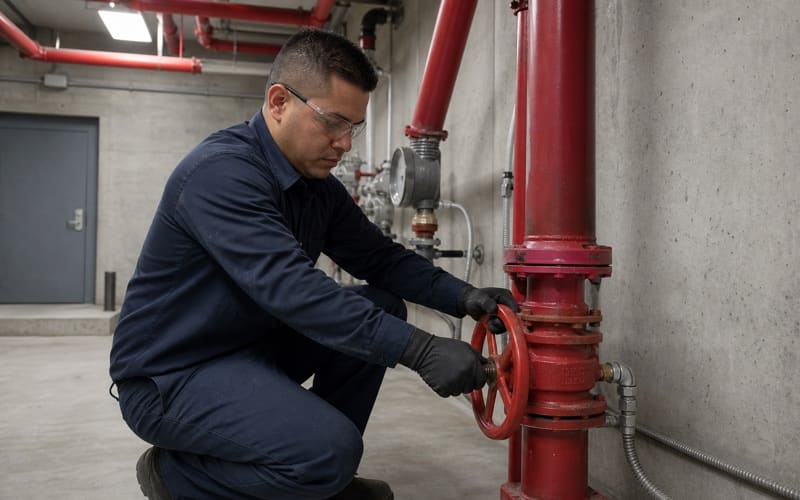
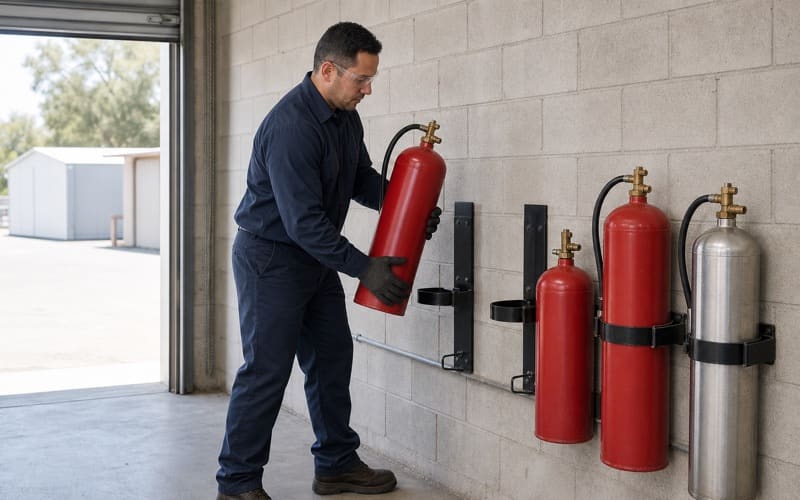
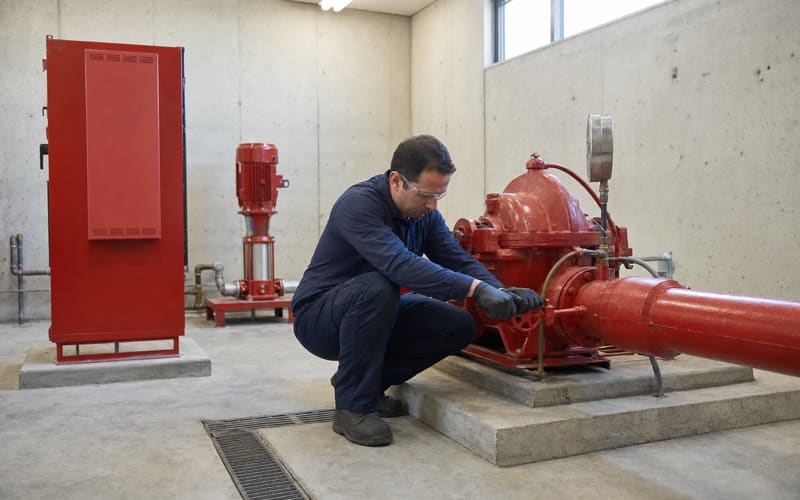
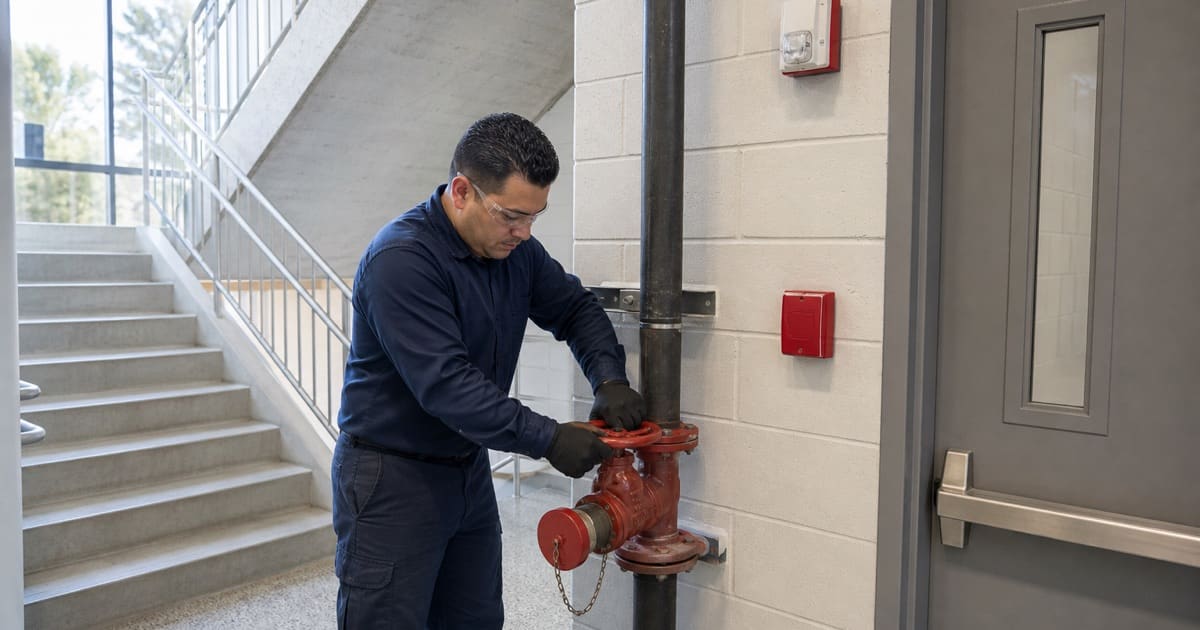
Larger and taller buildings depend on standpipes and fire department connections that have to be usable on the day they are needed, which means caps in place, gaskets sound, threads intact, and access unobstructed. We check and test those, along with hydrostatic testing where the schedule calls for it. Portable extinguishers under NFPA 10 are inspected on the same visit, with Class K in kitchens, ABC dry chemical through general areas, and CO2 where electrical equipment sits, all checked for placement, travel distance, mounting, and current service.
Records, Scheduling, and Correction
California Fire Code and Title 19 state fire marshal requirements put the burden of proof on the property owner, and proof means documentation showing that required testing happened on time with recorded results. For institutional owners that record often has to satisfy more than the fire authority, since insurers, lenders, and governing boards ask their own questions about the same buildings.
Reports Built to Be Reviewed
Each finding arrives with a photograph and a citation to the code section it comes from, which lets a facilities director defend a repair request to somebody controlling the budget without needing the contractor in the room. It also separates code obligations cleanly from recommended good practice, so nobody funds the second believing it was required. Findings are ranked by consequence rather than listed in whatever order they happened to be encountered.
Correction, Staging, and Emergency Work
Repairs are completed by the crew that performed the inspection, so work begins from direct knowledge of the building rather than a second billed diagnosis. Itemized pricing lets an owner clear urgent findings immediately and phase the remainder across a budget cycle, which suits institutional funding that arrives annually rather than on demand. We track recurring due dates for the properties we service, respond to impairments and failed inspections on an emergency basis, and work around operating hours so a venue, a campus building, or a storefront keeps functioning while its systems are brought current.
- Commercial & Industrial Only
- Code-Cited Inspection Reports
- Emergency Impairment Response