Long Beach Fire Suppression handles fire suppression in Norwalk for commercial and industrial buildings, and that is the only kind of work we take on. No residential service calls interrupt a scheduled inspection or pull a technician off a correction list halfway through an afternoon. Sprinkler systems, fire alarms, portable extinguishers, and kitchen hood suppression all run through one provider here, which gives an owner a single point of contact for the entire life safety package on a property instead of four separate vendors working from four separate calendars.
Most of what we do in the city is calendar work rather than emergency work. Water-based systems carry inspection, testing, and maintenance intervals under NFPA 25 that run quarterly, semi-annually, annually, and at five-year marks, and each of those intervals has its own distinct scope. We track due dates for the properties we service so an annual does not quietly slip past its month, and so a five-year internal obstruction inspection is not first discovered as overdue during a visit from the fire authority.
When something is actually wrong, we respond to it. Impaired systems, buildings that have failed an inspection, and properties working against a correction order get emergency attention, and the crew that identified a deficiency is the crew that returns to repair it. Every inspection we deliver arrives as a written report carrying photo documentation and the code section behind each item noted, and any correction plan prices deficiencies separately so an owner can decide deliberately what gets done now and what can reasonably wait.
Systems Across a Broad Commercial Base
Commercial property in Norwalk does not fall into one category, and neither does the equipment installed inside it. A single week of work here can move from a wet pipe system over a retail sales floor, to a dry pipe system in an unheated storage building, to a wet chemical system over a fryer line in a restaurant kitchen. We service that full range directly rather than subcontracting out whichever parts happen to fall outside a narrow specialty, which is what keeps one inspection visit from turning into three.
Water-Based Systems and Their Intervals
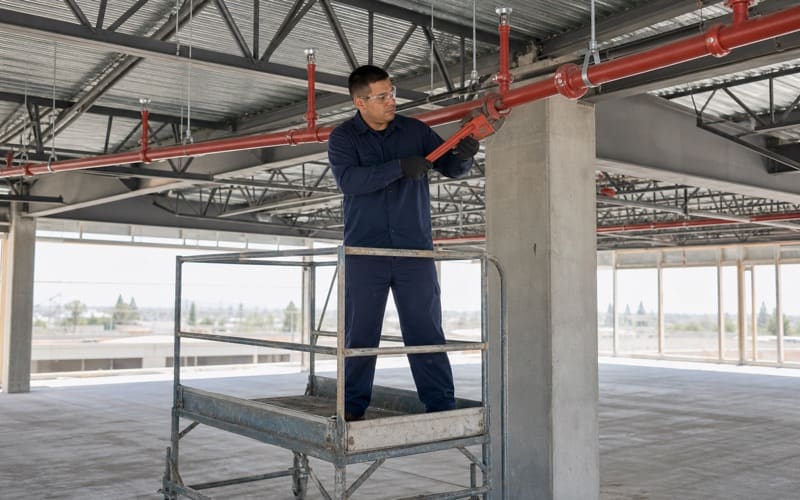
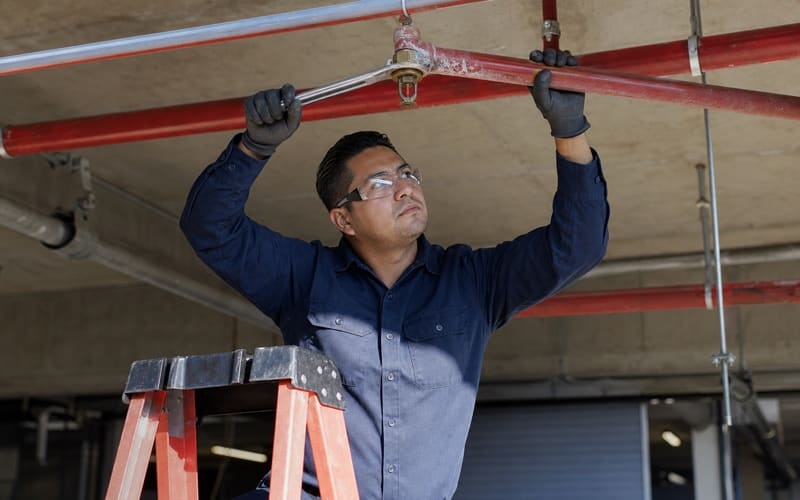
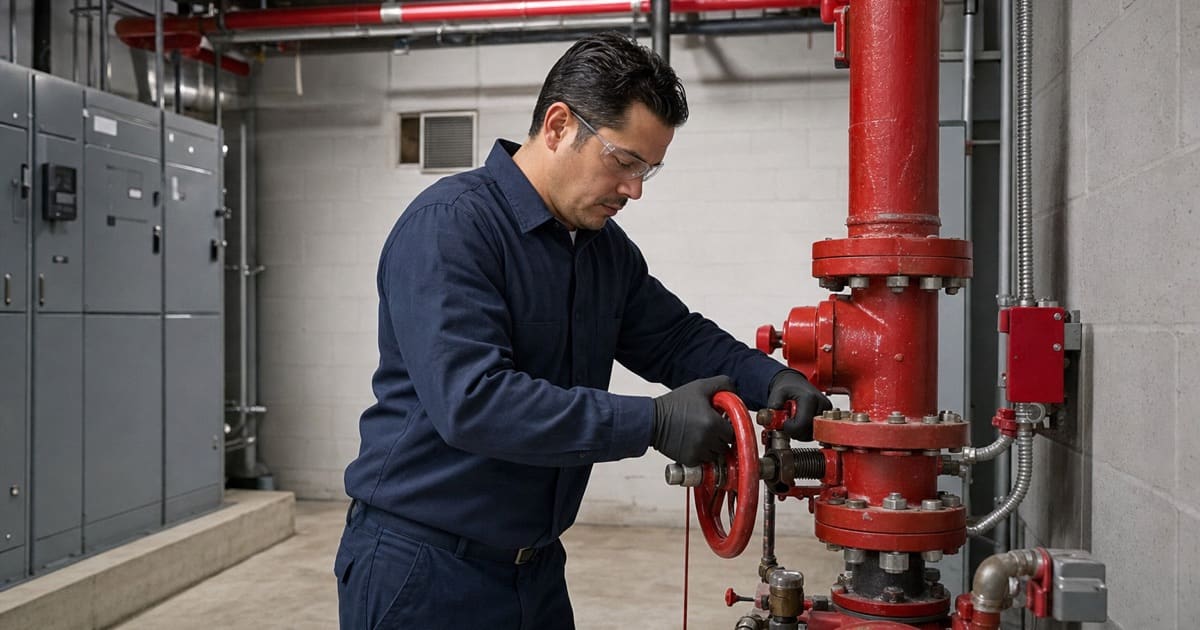
Wet pipe systems make up the majority of what is installed across the city, and they are the most straightforward to maintain, but they still require flow and tamper switch testing, gauge verification, and main drain tests on a fixed schedule. Dry pipe, pre-action, and deluge systems each add components of their own: air compressors, low-point drains, trip tests, and priming water levels that have to be physically verified rather than assumed from a previous report. We inspect pendent, upright, sidewall, concealed, and ESFR heads for corrosion, paint, loading, and obstruction, and we replace the ones that no longer qualify to remain in service.
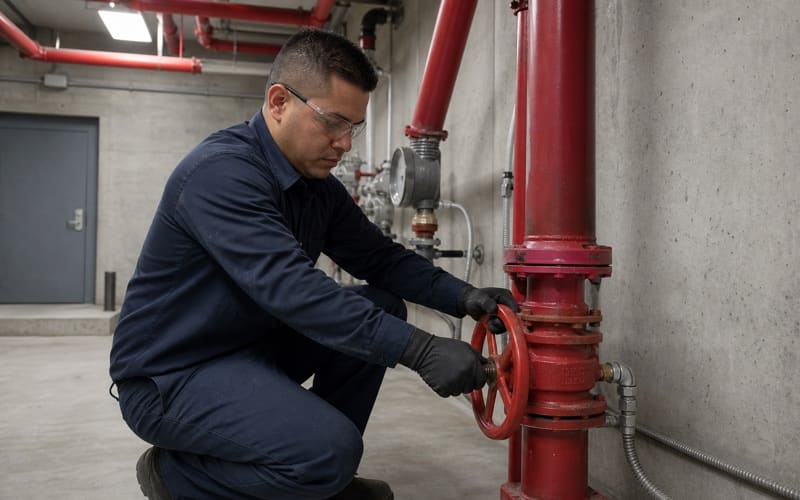
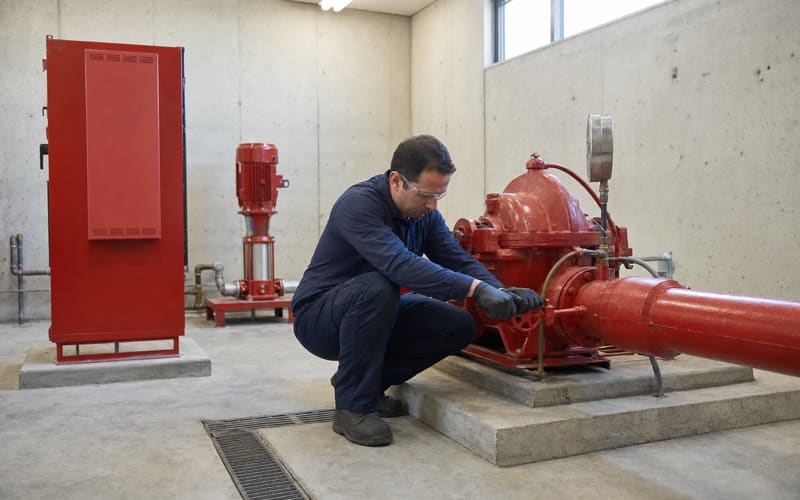
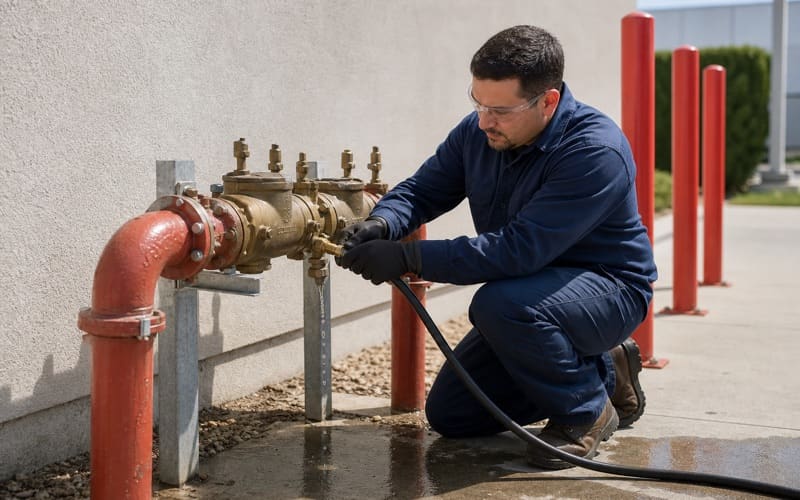
Supporting equipment gets the same level of attention as the pipe itself. Fire pumps and jockey pumps are churn tested and run under flow conditions where the installation allows it, standpipes and fire department connections are checked for caps, gaskets, and obstruction, and OS&Y valves and post indicator valves are exercised and confirmed to sit in the position the system actually requires. Backflow preventers, including double check valve assemblies and reduced pressure zone assemblies, are tested and tagged, while hydrostatic testing and five-year internal obstruction inspections are scheduled against a documented installation date rather than estimated.
Alarm, Detection, and Monitoring
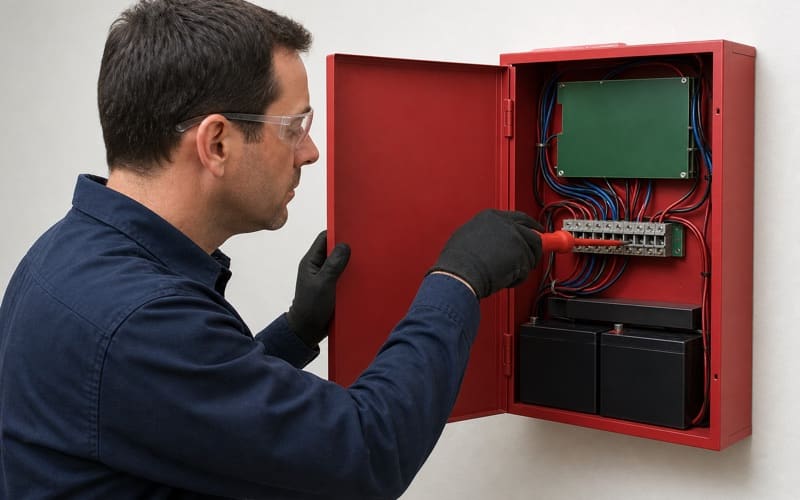
Fire alarm work in Norwalk follows NFPA 72, and a proper annual test covers considerably more than the panel display. Initiating devices, notification appliances, duct detectors, and the interface between the alarm and the sprinkler system’s flow and tamper switches all get exercised individually, and the monitoring connection is verified directly with the central station rather than taken on faith. On older panels we document which components have gone obsolete before they fail, because a board with no replacement parts still available becomes an emergency entirely on its own schedule.
Kitchen Hoods and Portable Equipment
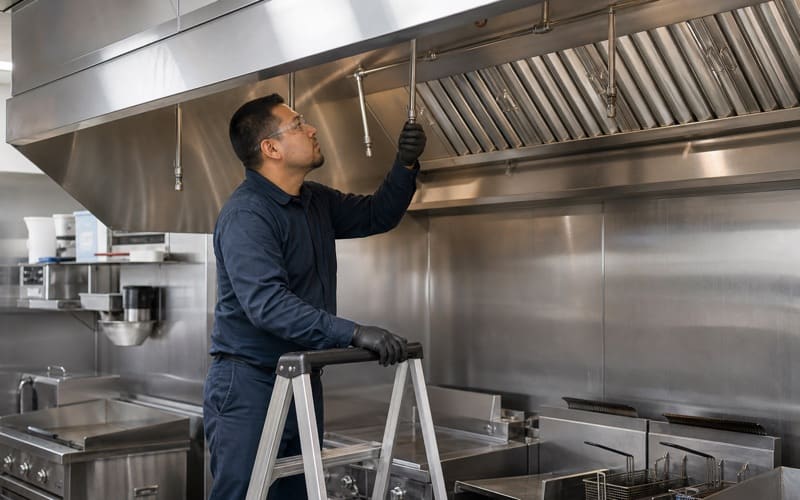
Restaurants, cafeterias, and any building with a commercial cooking line carry NFPA 96 ventilation requirements and NFPA 17A wet chemical suppression, and those systems need semi-annual service regardless of how lightly the kitchen actually runs. We service Ansul R-102 and Pyro-Chem systems, check nozzle placement against the appliance line currently sitting under the hood, and confirm that fusible links, gas shutoff, and manual pull stations all function as designed. Cooking appliances get moved and replaced over the years and the nozzles above them frequently do not follow, which is the single most common finding on a hood inspection.
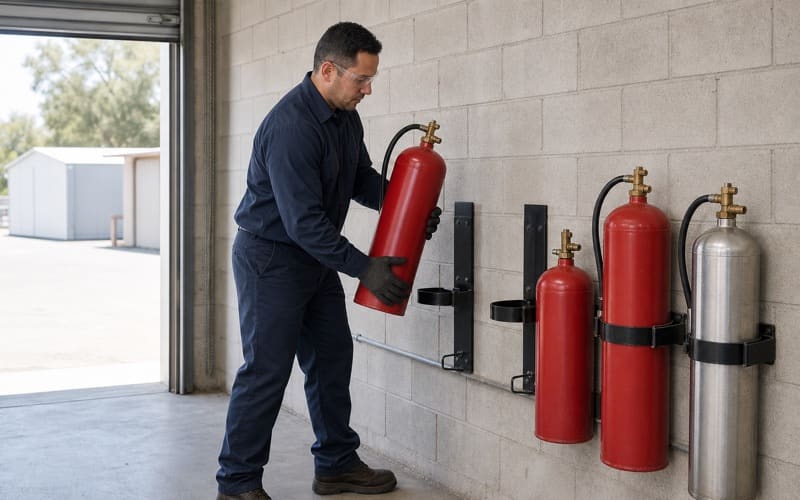
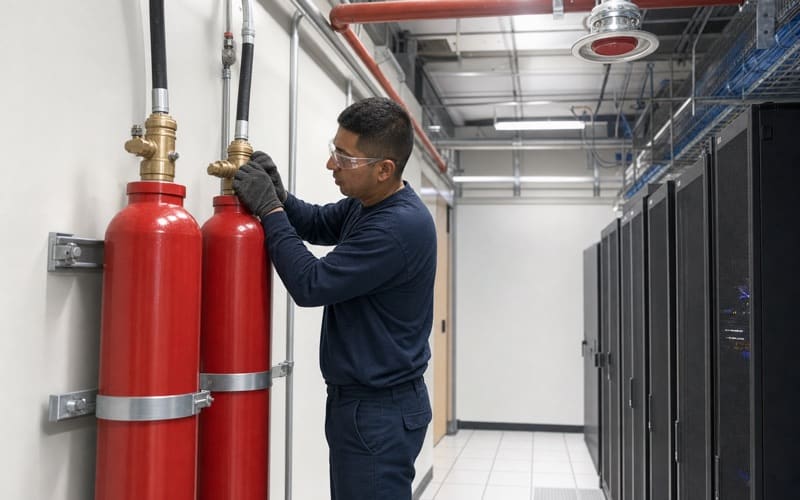
Portable extinguishers under NFPA 10 are the smallest line item on most properties and the one most often found out of date. Class K units belong in commercial kitchens, ABC dry chemical covers general occupancy areas, and CO2 units serve electrical and equipment rooms, and every one of them needs monthly visual checks by building staff, annual service from us, and hydrostatic testing or internal maintenance at intervals set by the unit type. We tag, service, and replace them during the same visit rather than billing a separate trip for it.
Looking for fire suppression closer to Lynwood? See Lynwood Fire Suppression.
A Large City and Its Building Stock
Norwalk is a city in Los Angeles County with a population of 102,773 recorded at the 2020 census, which gives it a commercial base broad enough to include very nearly every occupancy type we work on. That breadth is the practical reason no two inspection routes in the city look quite alike, and why a provider who only knows warehouses or only knows restaurants tends to struggle here. The building stock rewards familiarity with the whole range rather than depth in a single niche.
Retail Corridors and Multi-Tenant Buildings
Multi-tenant retail is the most common configuration we encounter, and it is also where responsibility for a system tends to be least clearly defined. A single sprinkler riser frequently protects a row of suites that have been subdivided, combined, and subdivided again over a couple of decades, and the head layout approved for the original floor plan may bear little resemblance to the walls standing there now. We document what is physically installed against what the space has actually become, because a tenant improvement that moved a demising wall without relocating a sprinkler head is a deficiency the next inspection will certainly find.
Changes at the ceiling cause the same problem in a quieter way. Dropped ceilings, added soffits, and new ductwork all change what a head can reach, and concealed heads get painted over or covered during a remodel far more often than anyone reports afterward. We check clearance and coverage as a standard part of the inspection instead of only testing the mechanical function of the system, and we note specifically where alterations to a space have outrun the system that is supposed to protect it.
Medical, Office, and Institutional Space
Buildings serving patients, students, or the general public draw stricter expectations from the fire authority and allow considerably less tolerance for downtime. Medical and dental suites, clinics, professional offices, and institutional buildings need testing that does not disrupt the people inside them, which in practice means early mornings, evenings, or shutdowns coordinated well in advance. We set the alarm testing window with the tenant directly so that a required sounding of notification appliances does not land in the middle of a treatment day or an occupied classroom.
Older Buildings and Undocumented Work
A great deal of commercial property in the city predates the current owner, the current tenant, and the current code cycle. Systems have been extended, valved off, partially replaced, and modified by contractors whose paperwork did not survive the last property transfer, and the result is a building where nobody on site can say with any confidence what is actually protected. We reconstruct the system from what is physically present — riser tags, head types, valve positions, pipe sizing — and produce a written record the owner can genuinely rely on going forward.
Records, Correction, and Deadlines
An inspection is ultimately worth whatever its documentation can prove. California Fire Code and Title 19 state fire marshal requirements place the burden squarely on the property owner to demonstrate that required testing happened, on schedule, with recorded results, and a tag hanging on a riser is not the same thing as a report. We build the record so that it answers the question an inspector from the fire authority actually asks, in the form they expect to receive it.
Reports That Cite the Code Section
Every deficiency we note carries a photograph and the specific code section it derives from. That matters for two separate reasons: it lets an owner see the physical condition without climbing a ladder to verify it, and it gives a straight answer when a tenant or a lender asks why a particular repair is being recommended at all. It also cleanly separates what the code requires from what we would merely suggest as good practice, so nobody ends up paying for the second while believing it was the first.
Staging Work Against a Budget
Correction plans price each deficiency on its own line rather than arriving as a single figure at the bottom of a page. A property carrying eighteen findings rarely needs all eighteen corrected within the same month, and itemizing them lets an owner clear the items with real consequence first and schedule the remainder across a budget cycle. We state plainly which findings are urgent, which are code obligations with a fixed deadline attached, and which are ordinary deterioration that will eventually become both if nothing is done.
Impairments, Failed Inspections, and Access
When a system goes out of service — a broken riser, a failed pump, a system drained for construction — the building is in an impairment and the clock has started running. We respond to those situations, and to buildings that have failed an inspection and are now working against a correction deadline with a reinspection already scheduled. Where a property manager, an owner, and a tenant all hold a say over access and shutdowns, we coordinate with each of them directly instead of leaving the building to relay messages between parties.
Operators running several locations across the metro get one consolidated schedule rather than a separate arrangement negotiated site by site. We sequence inspections so a regional manager is not fielding a different vendor at every address in a different month, and we work deliberately around operating hours so that a kitchen, a warehouse, or a storefront in Norwalk stays open and earning while the systems protecting it are tested and brought current.
- Commercial & Industrial Only
- Code-Cited Inspection Reports
- Emergency Impairment Response