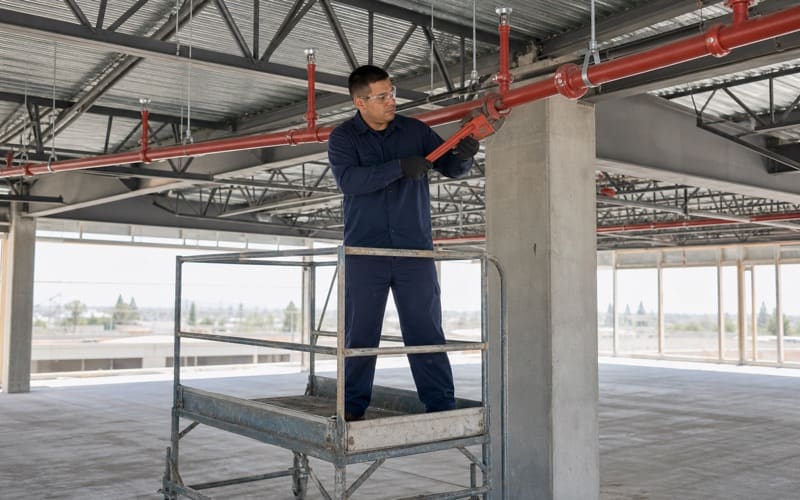
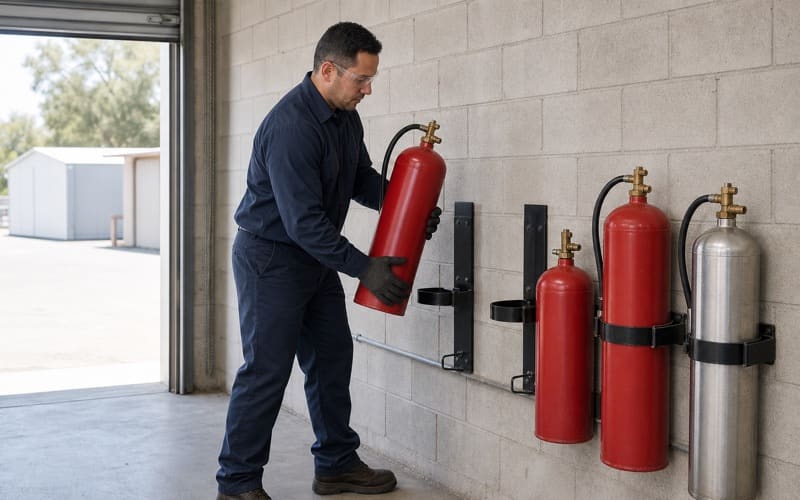
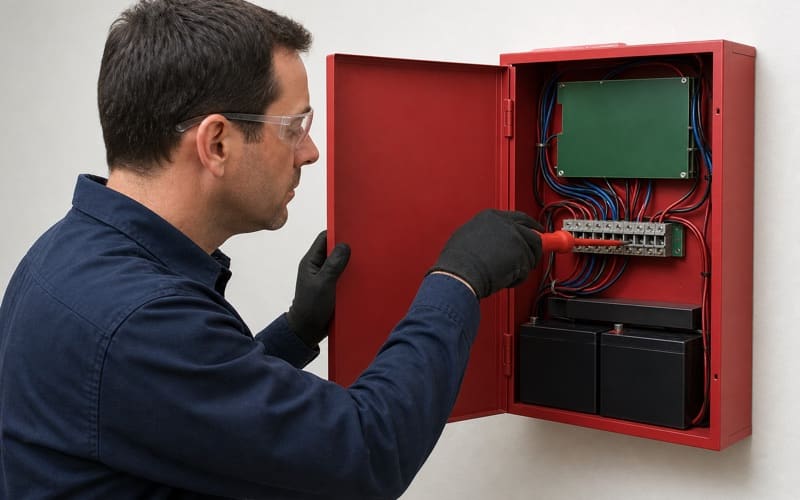
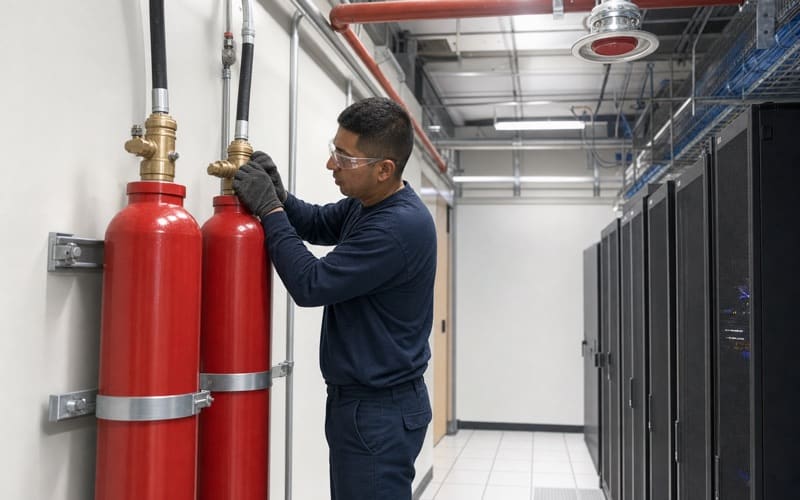
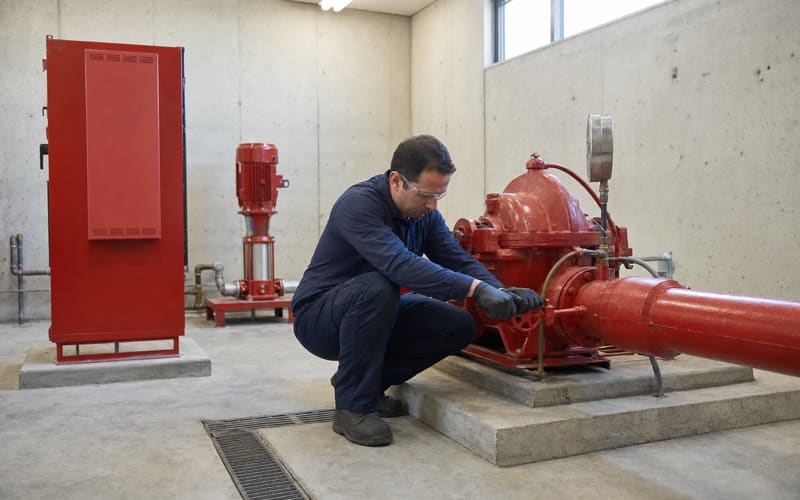
Long Beach Fire Suppression provides fire suppression in South El Monte for commercial and industrial buildings, covering sprinkler systems, fire alarms, portable extinguishers, and kitchen hood suppression as a single scope of work. For owners of smaller industrial property that consolidation is worth real money, since four separate vendors each making a trip to the same modest building costs more in mobilization than the work itself frequently justifies. Commercial and industrial property is all we do. One visit, one deficiency list, and one company answerable for the whole building.
Much of the building stock we work on here consists of flex and light industrial space subdivided into small units, where one structure holds several unrelated businesses doing entirely different things. A single roof might cover fabrication, storage, a workshop, and an office suite, each with its own hazards, all protected by a system designed when the building had one occupant and one purpose. That mismatch between a unified system and a fragmented occupancy is the defining inspection problem in this kind of property. Short leases mean the occupancy can change twice before the system is next inspected.
We approach it by looking at what each unit is actually doing rather than at what the building was designed for, and by documenting the result in one report covering the whole structure. Each deficiency carries a photograph and the code section behind it, priced individually so an owner can stage the work. Impaired systems and buildings under a correction deadline get emergency response. Recurring due dates are tracked against the property rather than against whoever currently manages it.
Multi-Unit Flex and Light Industrial Buildings
A building divided into small industrial units changes faster than almost any other commercial property type. Tenants come and go on short leases, fit out their space to suit whatever they do, and leave behind alterations the next occupant inherits without explanation. The fire protection is the one element expected to stay constant through all of it, which is precisely why it needs checking against current reality rather than against a drawing.
One System, Many Different Occupancies
The hazard in a unit depends entirely on its tenant. A unit used for storage, one used for fabrication, and one used as an office all sit under the same overhead system, and only one of those uses may match what the design contemplated. We ask what each unit is genuinely used for rather than what the lease describes, and where the current use exceeds what the installed protection was designed to handle, that appears in the report as a finding with the reasoning attached. The lease description and the actual use disagree more often than either party expects.
Higher-hazard activity turning up in an ordinary unit is the case worth catching early. Spray finishing, welding, battery charging, and quantities of flammable liquids all introduce requirements that general sprinkler coverage does not satisfy on its own, and a tenant undertaking them rarely thinks to tell the landlord. We identify these during the inspection and set out what the activity requires, so an owner can address it before a fire authority visit turns it into a violation with a deadline. Compressed gases and quantities of flammable liquid raise the same question in a different form.
Tenant Fit-Outs and Coverage Gaps
Build-outs in small units are frequently done quickly and cheaply, and sprinkler coverage is rarely part of anyone’s plan. New partitions create spaces with no head in them, mezzanines and storage platforms get built beneath existing heads, and offices constructed inside a warehouse shell end up with ceilings that shield everything below. We look specifically for added structure of this kind, because it produces areas with no protection at all while the building still looks fully covered from the floor. Mezzanines built beneath existing heads shield everything under them while the building still looks covered.
Ceiling work causes the quieter version of the same problem. Dropped ceilings, added ductwork, lighting, and signage all change what a head can reach, and concealed heads get painted or covered during a fit-out far more often than anyone reports. We check clearance and coverage rather than only confirming the system holds pressure, and we describe exactly which areas a change has compromised so the correction can be scoped without a return visit to work out what is needed.
Storage That Outgrows the Design
Small industrial tenants accumulate stock, and the space available for it is always the vertical space nobody is using. Storage height, racking arrangement, and what is actually being kept all determine whether the installed design remains adequate, and a tenant who adds a level of racking has changed the basis without touching the system. We measure the clearance that genuinely exists beneath the heads and document where storage has encroached on the space the design requires. We measure the clearance that genuinely exists rather than accepting a nominal rack height.
Idle pallets and packaging deserve their own mention, since they are among the most hazardous things commonly found in a small industrial unit and never appear in anyone’s plan for the space. Stacks of empty pallets stored indoors create a fuel load well beyond what surrounding protection was intended to handle. This is usually a finding a tenant can correct within the week at no cost, which makes it worth raising plainly rather than burying in a list. Clearing them is usually free, which makes it one of the more satisfying findings to report.
Looking for fire suppression closer to Signal Hill? See Fire Suppression in Signal Hill.
A San Gabriel Valley City
South El Monte is a city in the San Gabriel Valley of Los Angeles County, and at the 2020 census it had a population of 19,567, down from 20,116 in 2010. It sits at the northern edge of the area we cover, and we schedule work here in blocks rather than as isolated single visits, which keeps travel from becoming a cost the customer ends up carrying on a small job.
Owners With Several Buildings
Owners and operators holding more than one property get them scheduled together instead of as separate arrangements falling due in different months. One visit covering several addresses is more efficient for us and materially cheaper for the owner, and it produces a consistent set of reports that can be compared against one another. When a portfolio-wide question comes up about which sites are current and which have open deficiencies, it can be answered from one place. Consistent reports across a portfolio are what let an owner compare buildings rather than merely file them.
Restaurants and Commercial Kitchens
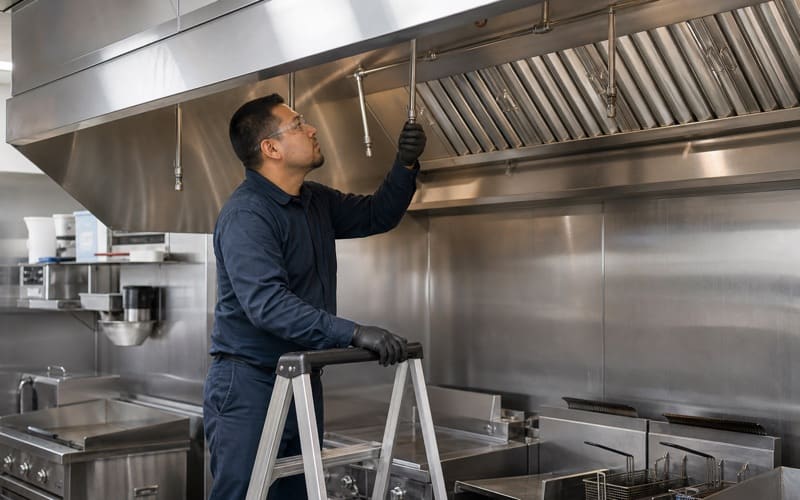
Food service throughout the city carries NFPA 96 ventilation requirements and NFPA 17A wet chemical suppression, requiring service twice a year regardless of how busy the kitchen is. We work on Ansul R-102 and Pyro-Chem systems, verify that nozzle coverage matches the appliances currently installed beneath the hood, and test fusible links, manual pull stations, and automatic gas shutoff. Where a kitchen operates inside an industrial building rather than a standalone restaurant, it is especially prone to being overlooked, since responsibility for it often sits with nobody in particular. Ansul R-102 and Pyro-Chem units make up most of what is installed, each with its own service particulars.
Working Without Closing
Small businesses feel an outage more acutely than large ones, and a day lost is a meaningful share of a month for a workshop or a fabricator. We schedule around operating hours, keep required shutdowns short and predictable, and give advance notice to every occupant the work will touch rather than only the party who booked it. Where an outage would need to run long enough to require a fire watch, we raise that when scheduling rather than once the system is already drained. Every occupant the work will touch gets notice, not only the party who booked the appointment.
Systems, Intervals, and Documentation
Testing intervals come from NFPA 25 for water-based systems and NFPA 72 for fire alarms, running quarterly, semi-annually, annually, and at five-year marks depending on the component. We track recurring due dates for the properties we service, which keeps a small owner from learning about an overdue obligation through a notice from the fire authority rather than from a calendar.
Water-Based Systems and Supporting Equipment
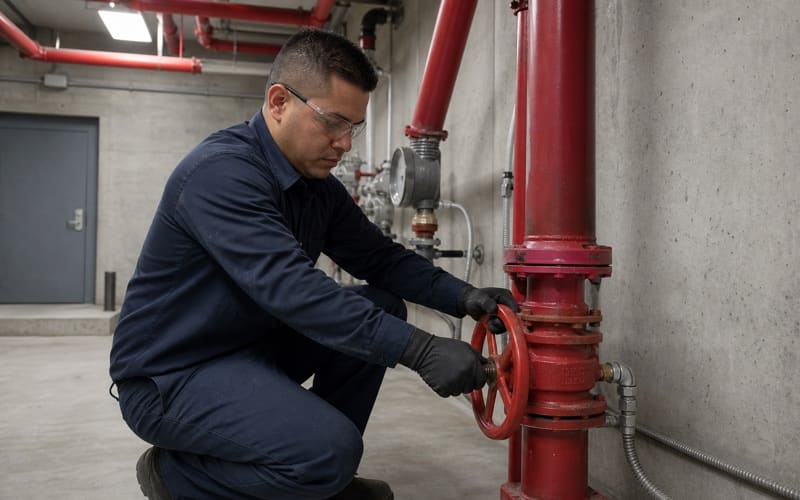
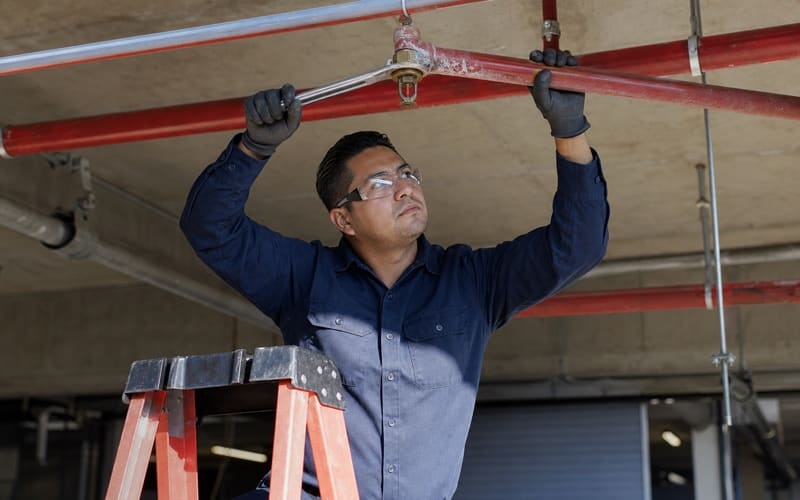
We run main drain tests and record actual readings rather than marking a pass, exercise OS&Y and post indicator valves, confirm flow and tamper switches report correctly to the panel, and inspect pendent, upright, sidewall, and concealed heads for corrosion, paint, loading, and obstruction. Backflow preventers on the fire line are tested and tagged annually, and five-year internal obstruction inspections are scheduled against the documented installation date instead of being estimated from the system’s appearance. A single main drain reading proves very little, while a series of them proves a great deal.
Control valve position is the item we treat most seriously, since a closed valve makes everything downstream ornamental. We verify each valve sits where the system requires, confirm tamper switches genuinely report a change rather than merely existing, and note the physical security of valves and risers. In a multi-unit building where several tenants have access to shared spaces, a valve nobody is watching is a realistic risk rather than a theoretical one. In a shared building where several tenants reach the same spaces, an unwatched valve is a real risk.
Alarms, Monitoring, and Portable Equipment
An NFPA 72 annual covers initiating devices, notification appliances, duct detectors, and the interface with the sprinkler system’s supervisory devices, and we verify signals actually arrive at the central station instead of assuming an intact path. Portable extinguishers under NFPA 10 are handled during the same visit, with ABC dry chemical across general areas, CO2 near electrical equipment, and Class K on cooking lines, all checked for placement, travel distance, mounting, and current service.
Records, Correction, and Response
California Fire Code and Title 19 state fire marshal requirements place the burden of proof on the property owner, and proof means a record showing that required testing happened on schedule with results attached rather than a tag hanging on a riser. We produce documentation built to answer what an inspector will actually ask, in the form they expect to receive it.
Findings and Correction Work
Every deficiency carries a photograph and the code section behind it, ranked by consequence rather than by the order it was encountered, which lets an owner distinguish what leaves a system unable to perform from what is wear worth correcting before it escalates. Repairs are carried out by the technicians who performed the inspection, working from firsthand knowledge of the building rather than a second billed diagnosis, and itemized pricing lets urgent items be cleared immediately with the balance phased across a budget cycle. Repairs begin from firsthand knowledge of the building rather than a second diagnosis billed beforehand.
- Commercial & Industrial Only
- Code-Cited Inspection Reports
- Emergency Impairment Response