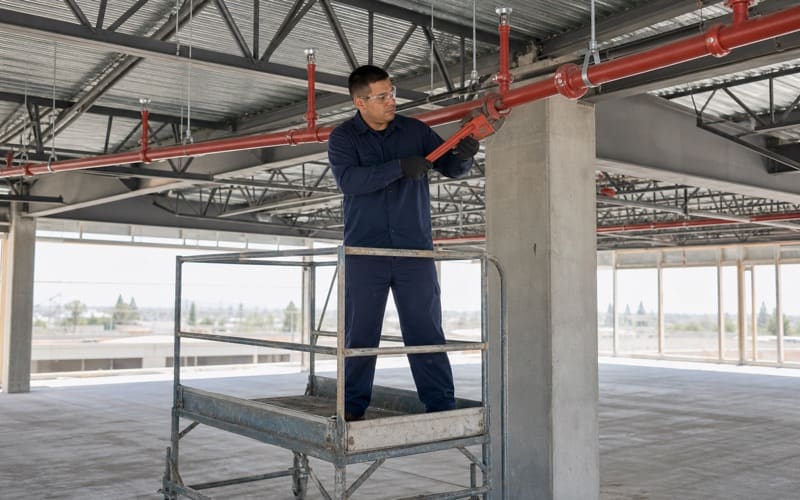
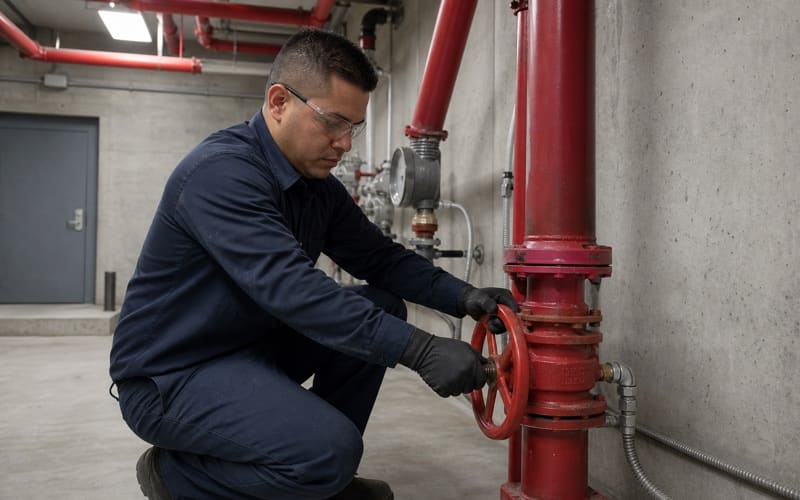
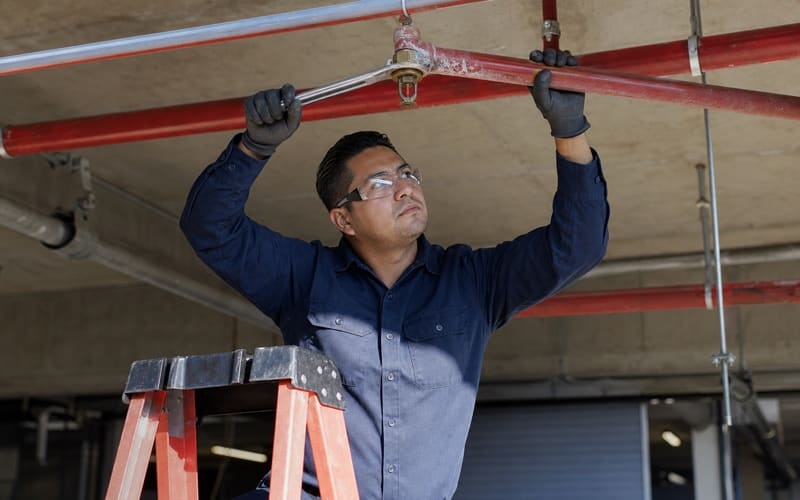
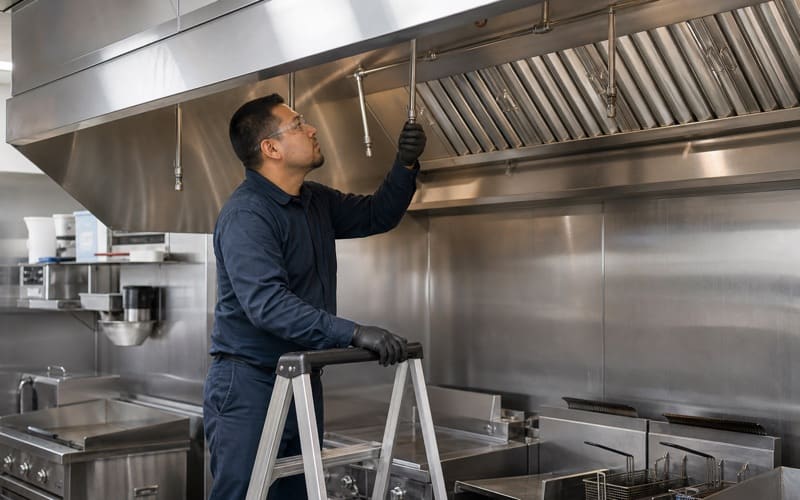
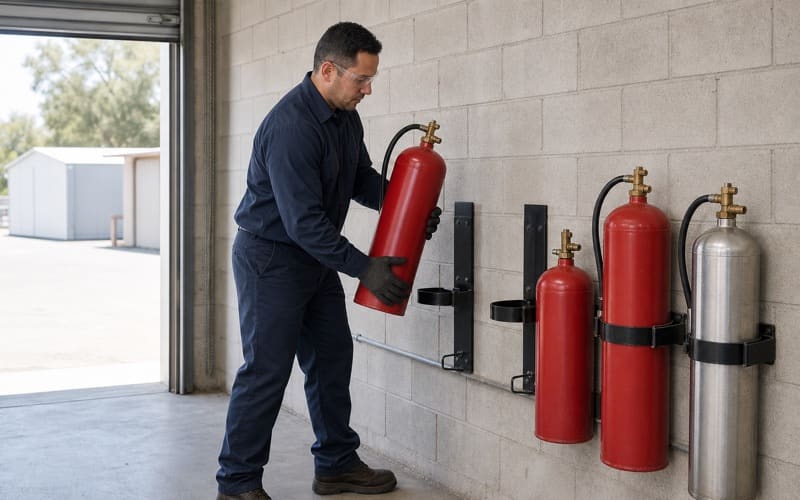
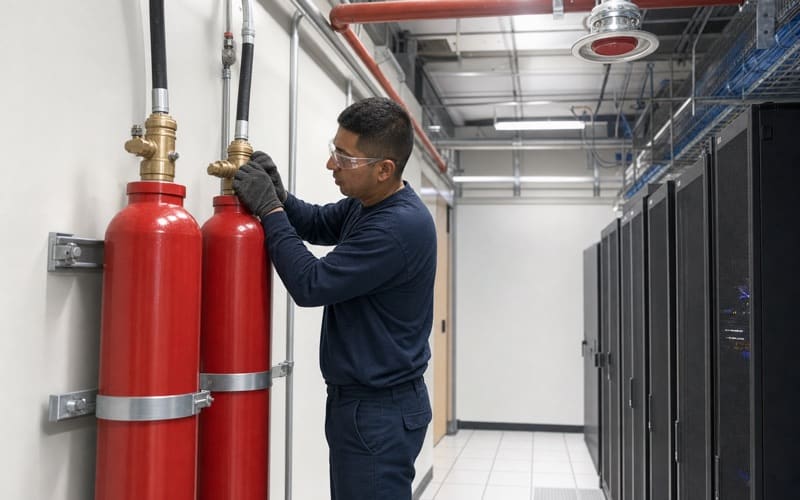
Long Beach Fire Suppression covers fire suppression in Stanton for commercial and industrial property, carrying sprinklers, fire alarms, portable extinguishers, and kitchen hood systems under one roof. Keeping all four with a single provider matters more than it sounds: it means one inspection visit, one deficiency list, and one company that cannot blame a missed item on whoever handles the other three. We do no residential work at all, so nothing on the commercial schedule gets displaced by a homeowner call.
Stanton sits in Orange County rather than Los Angeles County, and that distinction has practical consequences for a business owner who also operates elsewhere in the metro. The inspection intervals themselves come from NFPA and the California Fire Code and do not change at a county line, but the local process around them does — who reviews a plan, how a permit is pulled, what a fire authority inspector expects to be handed when they walk in. We work on both sides of that line regularly enough to keep the differences straight.
Our reporting is the same wherever the property sits. Each deficiency comes with photo documentation and the code section it derives from, and each one is priced individually in the correction plan so an owner can stage the work against an actual budget rather than facing a single unexplained figure. When a system is impaired or a building has failed an inspection, that moves to the front of the queue ahead of routine scheduled testing.
Working Across Two County Jurisdictions
Plenty of operators in this area run locations on both sides of the Orange County boundary, and managing that with separate vendors produces exactly the problem you would expect: different report formats, different schedules, and no single person who can say whether the whole portfolio is current. Consolidating the work removes that, and it removes the quiet gaps that open up when two companies each assume the other is handling a particular site.
Local Process, Permits, and Plan Check
When a repair rises to the level of needing a permit, or a system alteration requires plan check before work can begin, the timeline depends heavily on knowing how that particular authority handles submissions. We are familiar with the inspection, permit, and plan-check processes used locally, which shortens the distance between identifying a problem and being allowed to correct it. Nothing frustrates an owner facing a correction deadline more than losing three weeks to a submission that was incomplete on arrival.
Reinspection is where that familiarity pays off most directly. A building working against a correction deadline needs its repairs completed, documented, and presented in a form the authority will accept on the first return visit, because a second failure restarts a process nobody wants to repeat. We assemble the documentation package alongside the physical work rather than afterward, so evidence of correction is ready the moment an inspector arrives. Knowing what a particular office expects to be handed is frequently the difference between closing a violation and carrying it another cycle.
Multi-Site Scheduling Across the Metro
Operators running several locations get their inspections sequenced together rather than negotiated address by address. A regional manager responsible for sites in Orange County and Los Angeles County alike ends up with one calendar, one point of contact, and one consistent set of reports covering every property. When a portfolio-wide question comes up — which sites are due, which have open deficiencies, which are fully clear — it can be answered without assembling the picture from four different vendors’ paperwork.
Consistency in the reporting format matters as much as the scheduling behind it. When every site produces a report structured the same way, with deficiencies described in the same terms and ranked on the same scale, a manager can compare one location against another and see where attention is genuinely warranted. Portfolios inspected by a patchwork of local contractors never develop that comparability, and the practical result is that the most insistent vendor captures the budget rather than the property carrying the most serious findings.
Looking for fire suppression closer to Gardena? See Fire Suppression Services in Gardena.
Commercial Property in a Compact Orange County City
Stanton is a city in northern Orange County, within the Los Angeles metropolitan area, with a population of 37,962 at the 2020 United States census. It was incorporated in 1956, operates under the council-manager form of government providing a full range of municipal services, and is bounded by Cypress on the west, Anaheim on the north and east, and Garden Grove on the east and south. Being ringed by larger neighbors on every side shapes the commercial base here toward property that serves passing traffic and the surrounding area rather than a single dominant industry.
Roadside Commercial and Lodging
Buildings oriented toward arterial traffic — lodging, service businesses, retail, and the restaurants attached to them — share a common constraint, which is that they generate revenue at hours when a contractor would prefer to be testing systems. We schedule around that. Alarm testing that requires notification appliances to sound, and sprinkler work that requires a system to be drained, both get placed in windows agreed with the operator in advance rather than dropped into a business day unannounced.
Lodging property carries its own particular combination of systems. Guest corridors and common areas need notification appliances capable of actually waking an occupant, standpipes and fire department connections have to be verified as usable, and extinguisher cabinets throughout the building must be present, accessible, and in service. We inspect those alongside the sprinkler system rather than as separate line items, and we watch for the details that tend to slip on an occupied floor, including blocked access, missing cabinet glazing, and heads obstructed by furnishings.
Restaurants and Commercial Cooking
Kitchen suppression under NFPA 96 and NFPA 17A needs semi-annual service, and the systems we most often find in this kind of property are Ansul R-102 and Pyro-Chem wet chemical units. The recurring issue is not the suppression system failing but the appliance line beneath it changing: a fryer swapped for a griddle, a range shifted along the wall, a piece of equipment added at the end. Nozzle coverage has to match what is actually cooking underneath, and we verify that against the current layout every time rather than against the original installation drawing.
Light Industrial and Service Buildings
Smaller industrial and service buildings here tend to have been adapted rather than purpose-built, and their sprinkler protection was designed around whatever the original occupancy happened to be. Storage arrangement is where that most often comes apart, since racking height, aisle width, and what is being stored all bear on whether the installed density remains adequate. We check clearance beneath the heads, look at how the space is genuinely used day to day, and document any point where the protection and the occupancy no longer match.
Temperature rating is the detail most often overlooked in a building of this kind. Heads installed over a space that has since acquired a heat-producing process, a spray operation, or equipment running hot may be rated for conditions that no longer apply, and a head that operates early causes as much damage as one that operates late. We check ratings against the conditions actually present in each area, note where service bays have introduced hazards the original design never contemplated, and recommend replacement wherever the mismatch is real.
Multi-Tenant Buildings and Shared Systems
Where several tenants share one riser, the practical question is who is responsible for what, and that question tends to go unanswered until an inspection forces it. We identify what the shared system covers, note where tenant improvements have altered coverage without any corresponding change to the sprinkler layout, and give both the landlord and the occupants a clear account of the building. Coordinating access and shutdowns directly with property managers, owners, and tenants keeps that from turning into a scheduling standoff.
Systems, Testing, and Correction
The testing itself follows the intervals set out in NFPA 25 for water-based systems and NFPA 72 for fire alarms, running quarterly, semi-annually, annually, and at longer marks depending on the component. We track those due dates on behalf of the properties we service, which is straightforward for a single building and genuinely valuable for an operator whose sites each fall due in a different month.
Water-Based Systems and Supporting Equipment
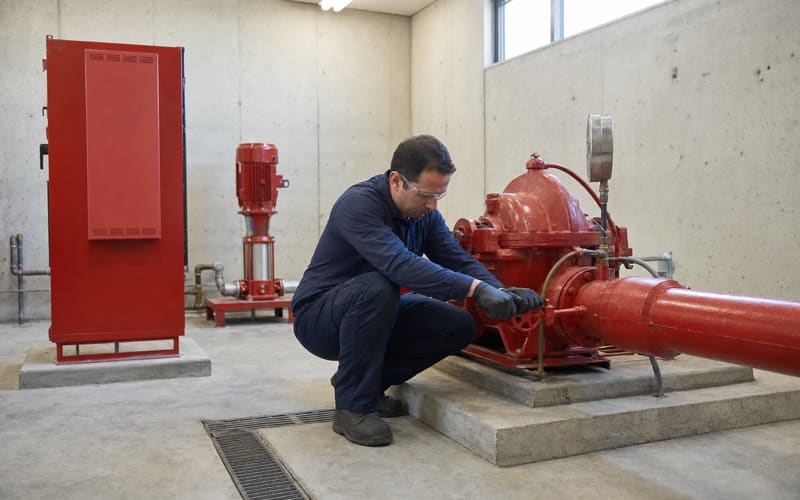
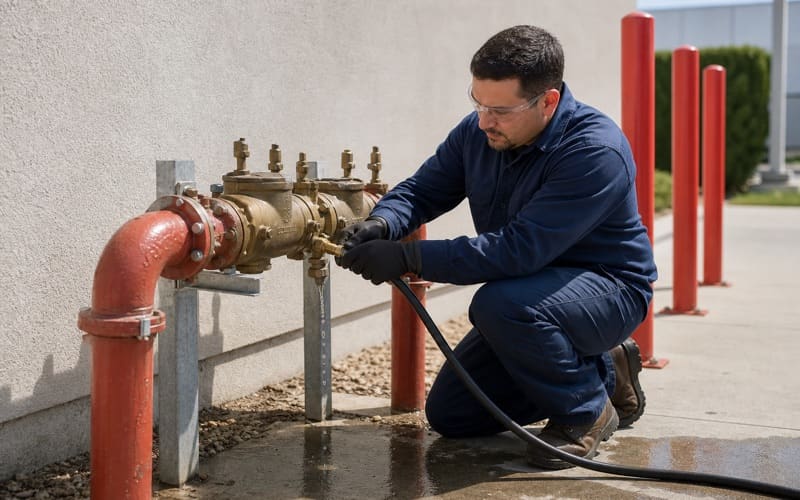
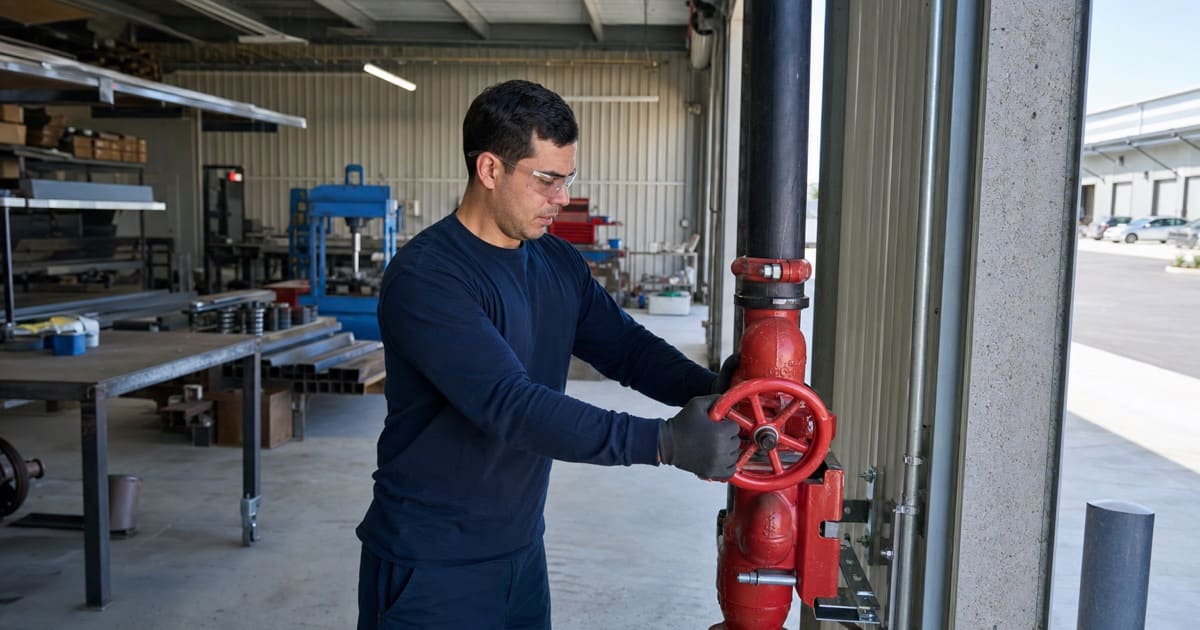
Wet pipe systems dominate the commercial stock here, though dry pipe installations appear wherever a space goes unheated, and each carries its own testing scope. We run main drain tests, exercise control valves, verify flow and tamper switches report correctly to the panel, and inspect heads for corrosion, paint, loading, and obstruction. Where a property has fire pumps, standpipes, or fire department connections, those are tested and checked as well, and backflow preventers on the fire line are tested and tagged annually.
Five-year internal obstruction inspections deserve particular mention, because they are the requirement most frequently allowed to lapse quietly. Opening the system at the prescribed points and physically examining the interior is the only reliable way to establish whether corrosion product, scale, or foreign material has begun restricting flow, and no external test will reveal any of it. We schedule these against the documented installation date and carry the examination out properly rather than treating it as a formality to be signed off from the floor.
Alarm Systems and Monitoring
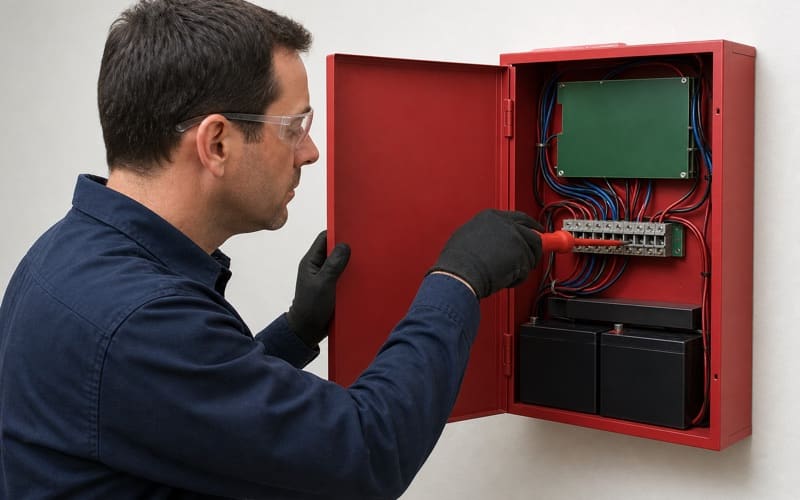
An NFPA 72 annual covers the initiating devices, notification appliances, and duct detectors, along with the connection between the alarm system and the sprinkler system’s supervisory devices. We confirm signals actually arrive at the central station rather than assuming the transmission path is intact, since a monitoring connection that quietly stopped reporting looks completely normal from the panel. Obsolete components get documented in advance of failure, which gives an owner time to plan a replacement instead of reacting to one.
Nuisance alarms get treated as a maintenance problem rather than an annoyance to be tolerated. A detector tripping repeatedly on dust, cooking vapor, or humidity usually indicates a device placed poorly for the conditions surrounding it, and the real consequence is that staff gradually begin disregarding the alarm altogether. We identify the cause, recommend relocation or a more suitable detection type where that is the answer, and record the history so a recurring pattern becomes visible instead of being rediscovered every time it happens.
Correction, Records, and Emergency Response
Deficiency repairs are handled by the same crew that carried out the inspection, so the work starts from firsthand knowledge of the building instead of a second diagnostic visit. Each correction plan itemizes cost by deficiency, letting an owner clear urgent items immediately and phase the remainder sensibly. For systems out of service and buildings under an active correction order, we respond on an emergency basis and document the impairment period from the moment it begins through the return to full service.
- Commercial & Industrial Only
- Code-Cited Inspection Reports
- Emergency Impairment Response